Foundations
Types of house foundations, and which one fits your lot
A house in Georgia sits on one of four foundation types, and which one fits comes down to your lot, your soil and what the house plans call for.
Updated September 25, 2026
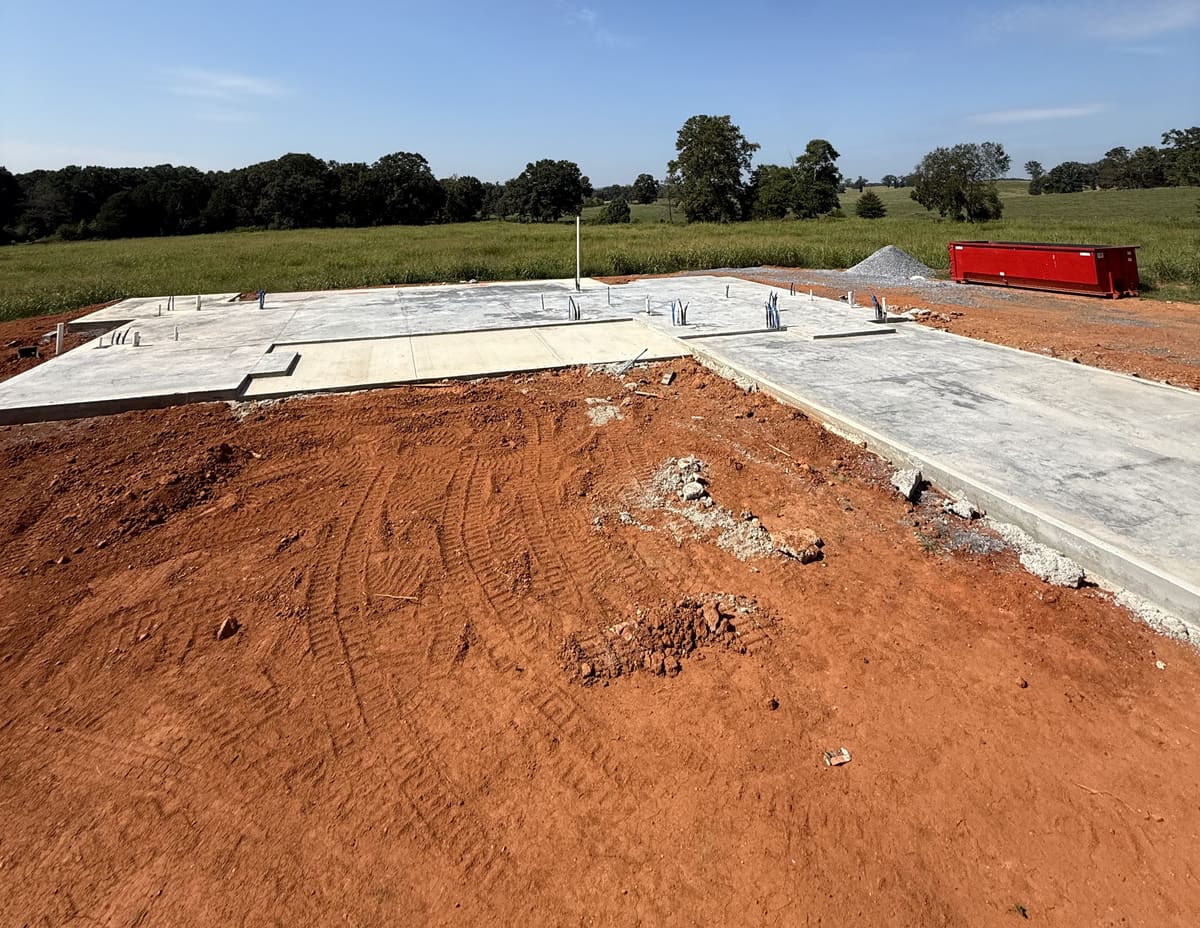
The four foundation types a house can use
A slab on grade pours the floor straight on the ground, sometimes as one monolithic pour and sometimes with a stem wall built up around the edge first.
A crawl space raises the floor on a short foundation wall instead, leaving open, ventilated space underneath for the plumbing and ductwork to run through. A basement takes that same idea deeper, turning the space below the floor into a room you can actually use.
Piers and beams hold the floor up on separate concrete supports instead of a continuous wall, with framing spanning between them. A house plan settles on one of these because of the lot, the soil and what's happening above it, not because one type simply beats the others everywhere.
Which foundation works on a sloped lot?
A pier and beam foundation or a crawl space generally works with a slope more easily than a slab does. Both can step down a grade without moving much dirt.
On a sloped lot, a slab on grade usually means cutting and filling first, or a stem wall tall enough on the low side to level things out, and our crawl space vs. slab guide covers why a slope tips some homeowners toward a crawl space. A basement can work into a slope too, especially where the lot drops enough for a walkout on one side.
None of that rules a slab out on a slope. It just usually costs more in site work to get there.
Why clay soil changes the calculation
Much of Georgia sits on red clay that holds water and swells when it's wet, then shrinks back down as it dries out. A foundation that doesn't account for that movement can crack or settle unevenly over the years.
So the soil on your specific lot matters as much as the foundation type you land on. A soil test before you settle on one tells you what you're actually building on, and it's a normal early step for a new house, not an extra one.
Sandy or well-drained soil gives you more room to choose across all four types. Heavy clay narrows the choice and usually means an engineer sizes the footings for it.
What every footing has to reach, whatever sits on top of it
No matter which of the four types a house uses, the footing underneath still has to reach solid, undisturbed ground. That's the same minimum the state code sets for a house's footings anywhere in Georgia.
The number is 12 inches below undisturbed ground at least, deeper where frost protection applies. A slab's edge, a crawl space wall, a basement wall and a pier all have to meet that same minimum.
What's different between them is what happens above it, not how deep they're required to start.
Do basements or pier and beam foundations show up in Georgia?
They do, just less often than a slab or a crawl space. A basement needs a lot with the right drainage and enough natural slope to make a walkout practical, plus soil that won't push against a below-grade wall the way expansive clay can.
Pier and beam shows up more on older homes, on lots with drainage trouble, or where easy access to the plumbing underneath matters more than a solid concrete floor. Both generally cost more to build than a basic slab, mostly because a basement means excavation and walls, and pier and beam means framing a whole floor over open space.
Picking a foundation type for your lot
A flat lot and a tight budget usually point to a slab. A sloped lot, heavy clay or a need to reach the plumbing later points more toward a crawl space, and a lot with a walkout grade opens up a basement as a real option.
If a slab and a crawl space are the two you're actually deciding between, our crawl space vs. slab guide goes deep on the Georgia-specific side of that call: moisture, termites and how each one lives day to day.
Setting a mobile or manufactured home instead of building new? Our mobile home foundation guide covers the foundation types that apply there instead, which aren't quite the same four.
Our home foundations page covers the concrete work for a new house, and once you know the lot and the timeline, send them our way.
What else do people ask about house foundation types?
What are the four types of foundations?
A house typically uses one of four foundation types: a slab on grade, a crawl space, a basement or piers and beams.
Which foundation works best on a sloped lot?
That depends on how much the lot actually drops. A rule of thumb: once a lot falls more than a few feet across the house footprint, cutting and filling a slab flat starts costing real money, and a crawl space or pier and beam foundation starts looking better instead.
Which foundation is cheapest to build?
A basic slab on grade is typically the least expensive of the four to build, since it skips the extra walls, framing and excavation the others need. A basement or a pier and beam foundation generally costs more because of the added excavation, walls or framing involved.