Foundations
Mobile home foundation types, and the advantages of each
A lender that needs a permanent foundation narrows the choice more than the home itself does. Short of that, several foundation setups work under a mobile or manufactured home, each suited to different soil and support needs.
Updated September 25, 2026
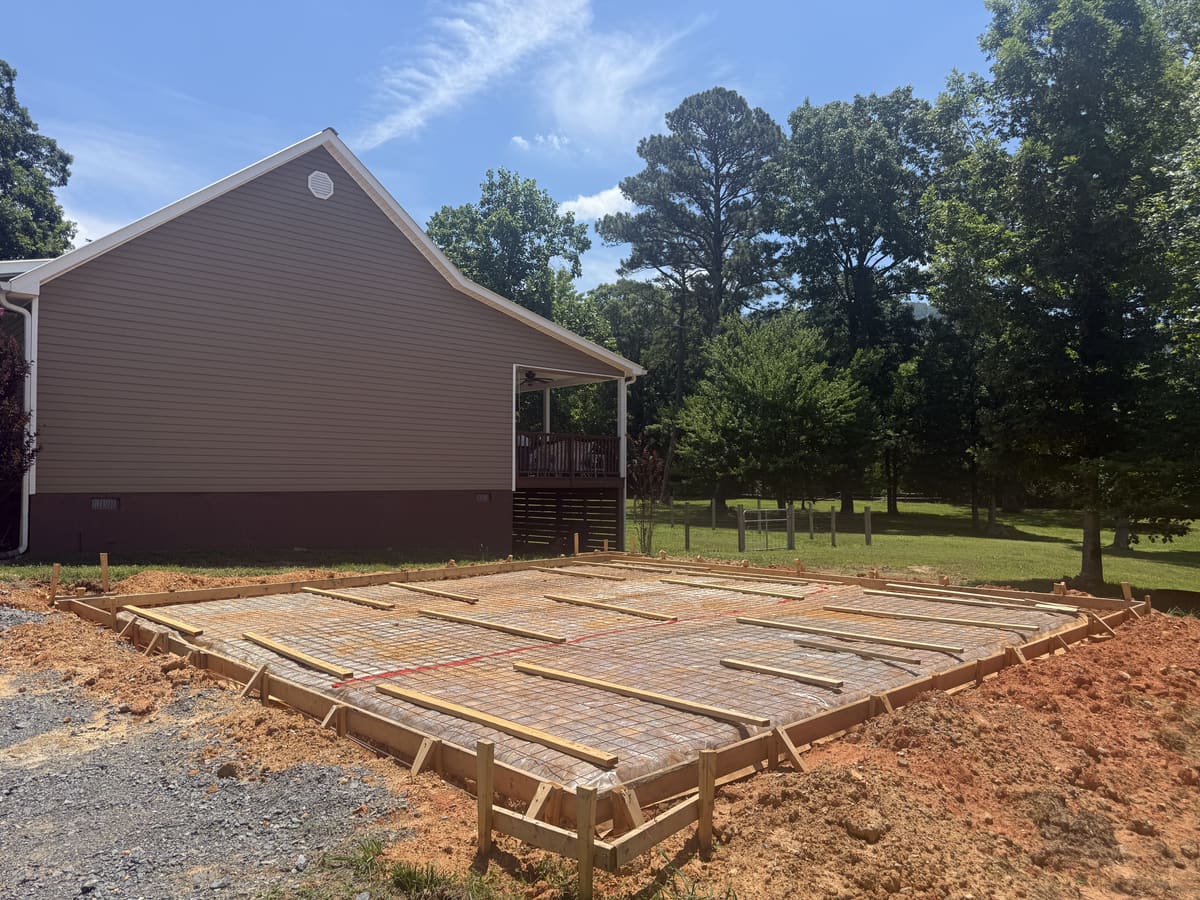
The foundation options for a mobile or manufactured home
A mobile or manufactured home typically sits on one of four setups: piers and anchors on footings or pads, concrete runners under the steel beams, a full concrete slab, or a perimeter foundation wall around the edge. Piers and anchors are the baseline almost every home needs in some form, since they carry the weight and tie the home down against wind.
Runners, a slab or a perimeter wall build on that baseline instead of replacing it. They give the home more support, a cleaner look underneath, or, with a full perimeter system, what a lender may treat as a permanent foundation.
Piers, anchors and the footings or pads under them
Piers sit under the steel I-beams that run the length of the home, spaced out to carry the load down to a footing or a precast pad below each one. Anchors and straps, the tie-downs, hold the frame to the ground against wind uplift.
The footing or pad under each pier still has to reach solid ground, not loose fill. So the site gets graded and checked before a single pier goes in.
It's a simpler, faster setup than a full slab. That's part of why it's still the most common way a mobile home gets set.
What concrete runners do that piers alone don't
Concrete runners are continuous strips of concrete poured along each steel beam line, in place of a separate footing or pad under every pier. The piers still sit on the runner; what changes is what's under them. Spreading the load along a strip instead of a series of points means fewer settling issues over time on softer or less consistent soil.
It also gives the anchoring system a solid, continuous edge to tie into. Runners cost more than piers alone, in relative terms, but less than a full slab, since they only cover the ground under the beams instead of the whole footprint beneath the home.
Does a mobile home need a full slab?
Not always. A full slab covers the entire footprint under the home instead of just the beam lines, and it gives the piers and anchors one continuous surface to bear on and tie into.
It costs more than piers or runners to pour. But it leaves a clean, dry surface underneath, which matters if you plan to skirt the home and use the space for storage.
A lender chasing a permanent foundation isn't locked into a slab or a perimeter wall: an engineered pier and footing system can qualify too, once an engineer certifies it to HUD's Permanent Foundations Guide, the standard lenders use.
Who signs off on the installation in Georgia and Alabama?
Both states run their own oversight on top of whichever foundation gets chosen. In Georgia, the Safety Fire Commissioner's office issues an installation permit for every new or used manufactured home set in the state, and it inspects a share of the installations each installer completes.
Alabama runs a similar setup through its Manufactured Housing Commission. That commission enforces the state's installation standards and inspects new homes as they go in to confirm the work meets or exceeds the federal standard.
Neither office requires a particular setup; each checks that the one you pick meets the standard for the home's size, wind zone and site.
Picking the right setup, permanent or not
Every setup above answers the everyday question of what holds the home up and keeps it from shifting. A permanent foundation is a narrower, lender-defined category on top of that, built and certified to a specific federal guide.
Our permanent mobile home foundation guide covers what that involves if a loan or a title change is part of your plans. Setting a house instead of a manufactured home? Our guide to house foundation types covers the foundations that apply there.
Whichever direction fits your site, our home foundations page covers the concrete work, and telling us about the home and the lot is the way to start pricing it out.
What else do people ask about mobile home foundations?
What foundation is best for a mobile home?
There isn't one answer for every home: piers and anchors handle most setups, while runners, a slab or a perimeter wall add more support or a more finished look underneath. If a lender needs a permanent foundation, start from that requirement; our permanent foundation guide covers which setups qualify.
Does a mobile home need a concrete slab?
No. Piers and anchors on footings or pads are the baseline most mobile homes use, and plenty of homes never need more than that. A slab is one option among several, usually chosen for a finished look underneath or because a lender is asking for a permanent foundation.
What are concrete runners under a mobile home?
Continuous strips of concrete under the beam lines, in place of a separate footing or pad under each pier. They matter most on soft or uneven ground; on firm, level ground, a pad under each pier usually does the job.