
Concrete patios, broom finished or stamped
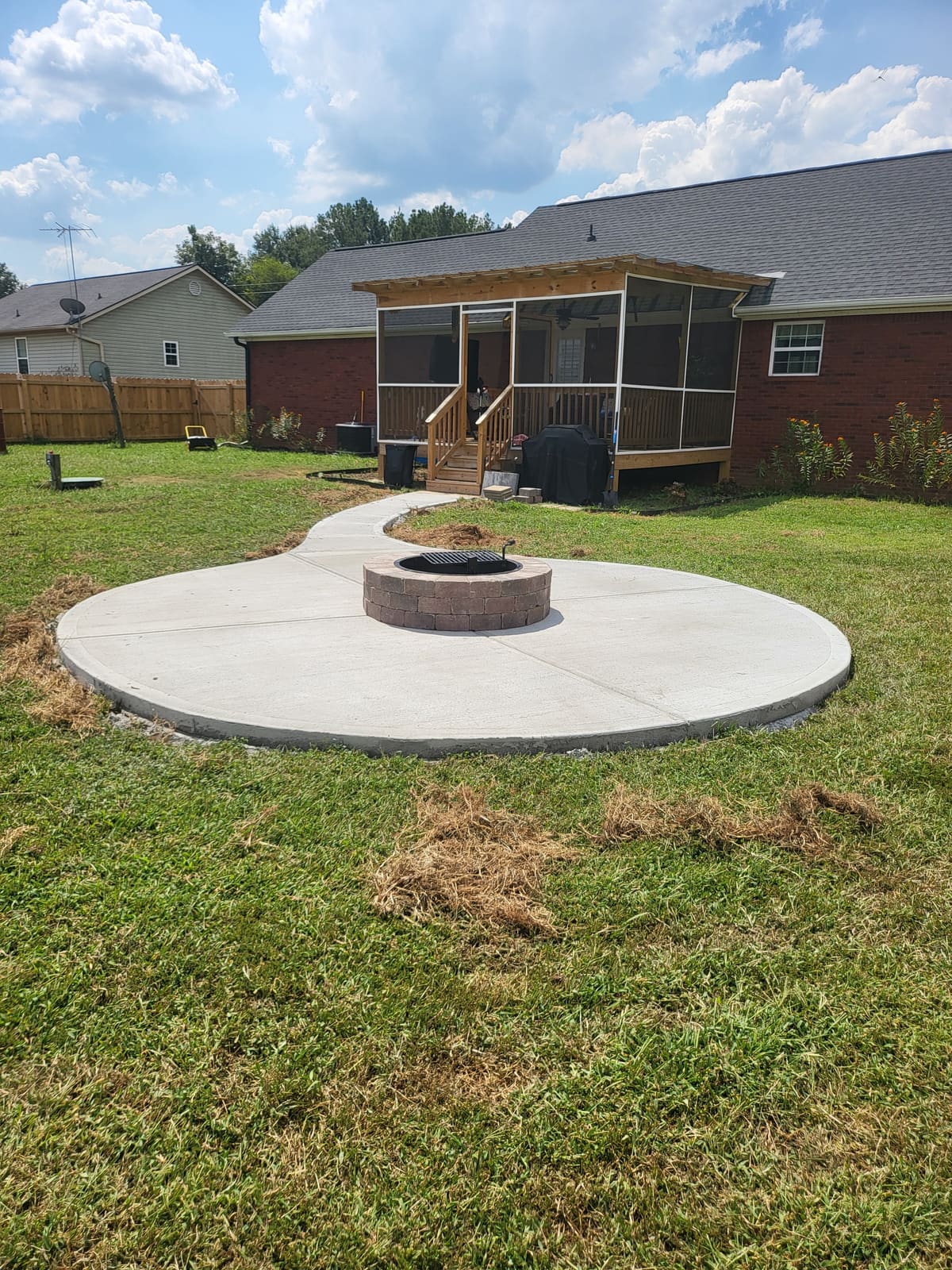
A concrete patio is a poured slab in the backyard, built for a grill, a dining table, a fire pit or just somewhere flat to put chairs. We pour broom-finished and stamped patios, and we'll help you size one before the forms go in.
Get an estimate
Tell us what you're pouring and where, and we'll get back to you.
Call or text (762) 842-4822 for an estimate.
Thanks, we've got it.
We'll get back to you about your estimate. If it's urgent, call or text (762) 842-4822.
Sizing a concrete patio for how you'll use it
A patio built for two chairs and a small table doesn't need the footprint of a full outdoor dining set or a fire pit with room to pull seats back. Think through what's going on it and how many people usually need to fit, and size the slab around that.
A fire pit needs more room than the chairs around it suggest. Most fire pits call for open clearance around them, which adds to the footprint beyond just the seating itself.
Plan for a grill or a smoker off to one side too, so the cooking area doesn't eat into the space you wanted for sitting.
Broom finish or stamped concrete
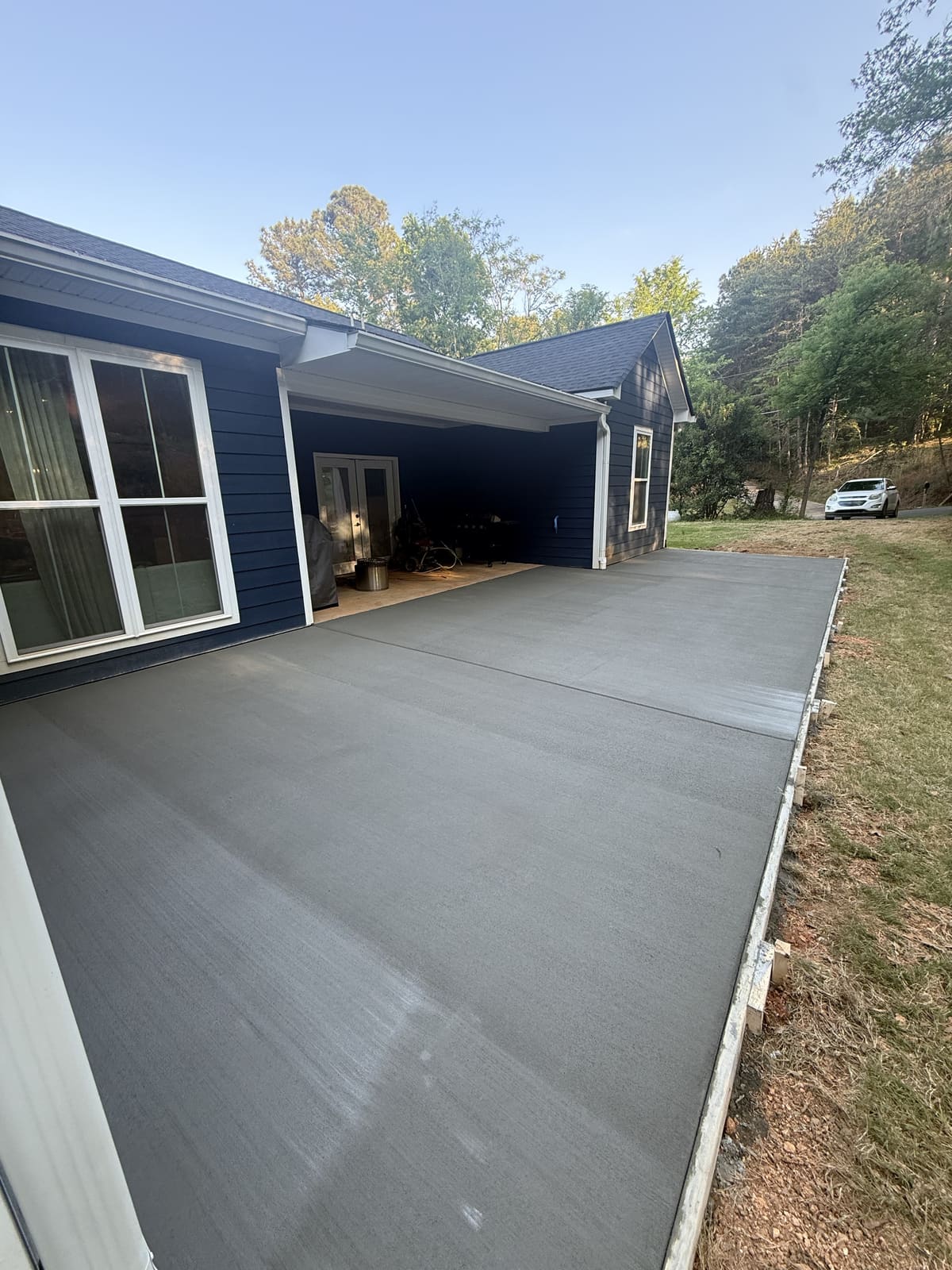
A broom finish is the plainer, more common choice for a patio. The texture is dragged in with a broom once the surface has been floated, and it gives bare feet some grip when the slab is wet.
Color is part of the decision even on a plain broom finish: concrete can be tinted for the whole slab instead of left the standard gray. It's a simpler option than a full stamped pattern if you want some color without the added upkeep.
Stamped concrete presses a pattern and color into the surface for a look closer to stone, brick or tile. It holds up fine outdoors as long as it gets resealed on a regular schedule.
Why does a concrete patio need to slope away from the house?
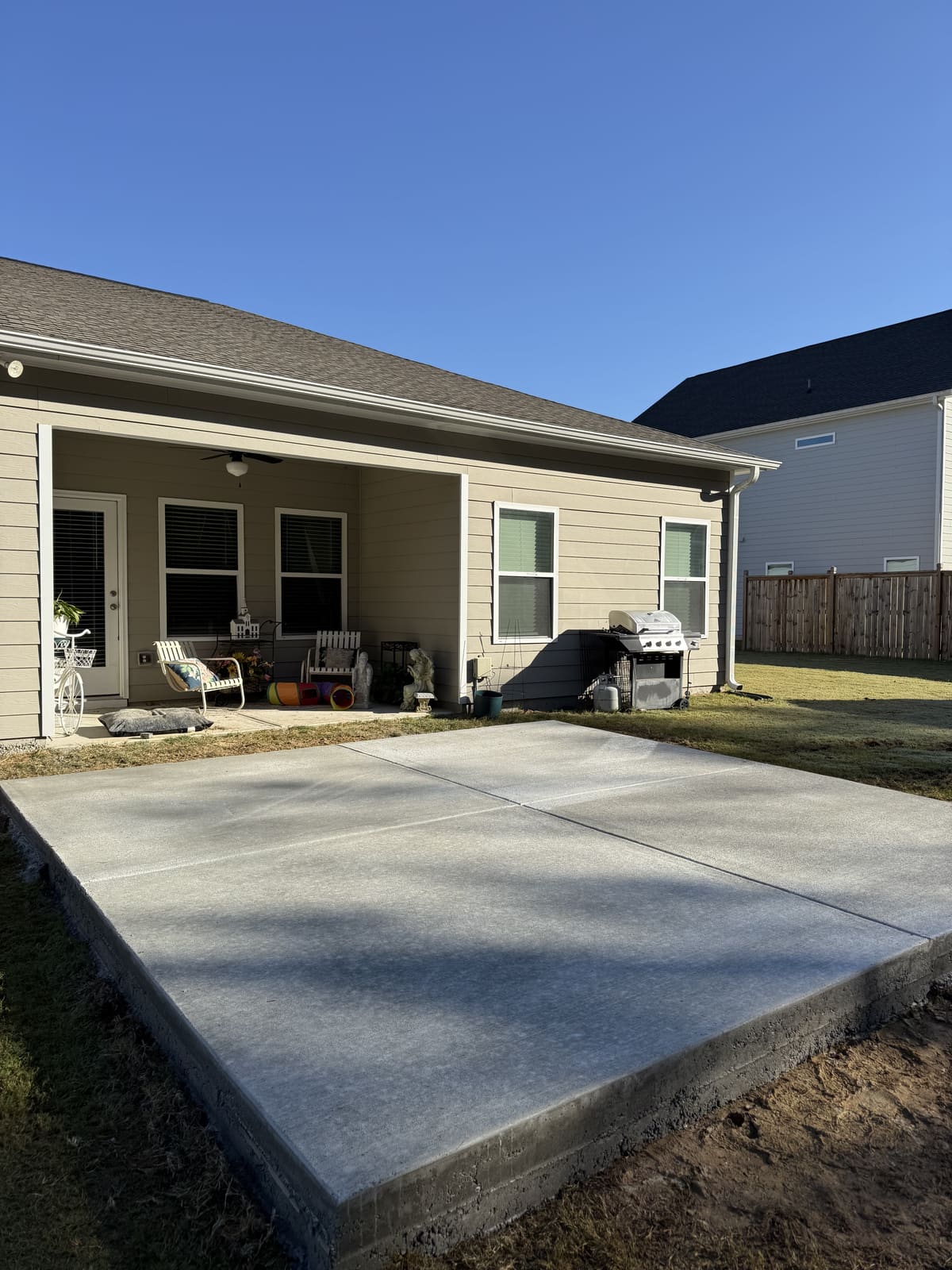
A patio is poured with a slight slope built in, angled away from the foundation so water runs off into the yard instead of pooling against the house. That slope is easy to miss looking at a finished patio, but it's doing real work every time it rains.
The seam where the patio meets the house usually gets a joint too, which gives the two surfaces room to move independently.
Where the yard falls away from the house, a patio sometimes needs a step or two down at its outer edge instead of sitting flush with the grass. That's a detail to mention when you reach out.
Joints and cracks in a new concrete patio
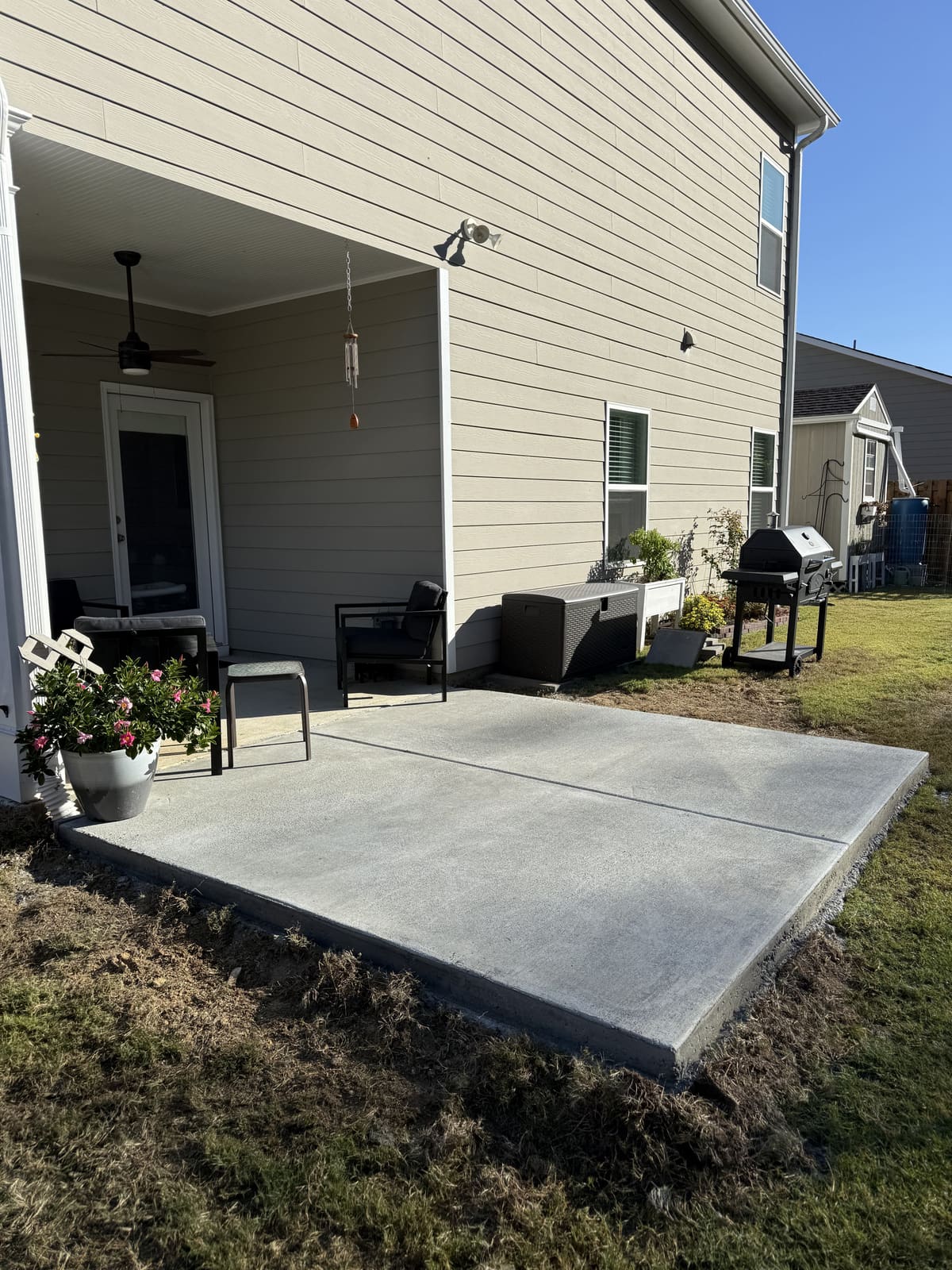
Every concrete patio gets joints cut or tooled into it on purpose, laid out ahead of the pour so the slab has chosen lines to follow as it shrinks while curing. A crack that follows one of those lines is the joint doing its job.
Joints usually run in a grid, with extra ones at inside corners, around posts or steps, and wherever the slab changes direction.
A poured patio or a paver patio: how each one ages
Concrete goes down as one continuous slab, while pavers are individual units set in a bed of sand or gravel.
Pavers make it easier to swap out a single damaged piece without redoing the whole surface, which is one reason some homeowners lean that way. Concrete gives up a little of that flexibility in exchange for a smoother, more uniform surface, with no joints between individual units to catch a chair leg or work loose over time.
Our pavers vs. concrete guide walks through how they compare on cracking, weeds and upkeep over time. For typical price ranges by size and finish, see our concrete patio cost guide.
Ready to talk through your patio? Send us the details and we'll follow up.
Questions about concrete patios
How do you keep a concrete patio from cracking?
No concrete patio is crack-proof, but joints get cut into the slab in a pattern that gives it planned spots to crack instead of random ones. Good preparation underneath and controlling how fast the concrete dries in hot weather also help keep cracking to a minimum.
Are hairline cracks in a new patio normal?
Yes. Concrete keeps curing and shrinking slightly for weeks after it's poured, and a thin crack that stays close to a joint is a normal part of that, especially in the slab's first year. On its own, that's not something to worry about.
How big of a crack is acceptable in concrete?
A hairline crack, thin enough that you can barely catch a fingernail on it, is normal in any concrete slab. Once a crack is wide enough to slide a coin into, catches a shoe, or has one side sitting higher than the other, the ground under it has moved. If we poured it, let us know.
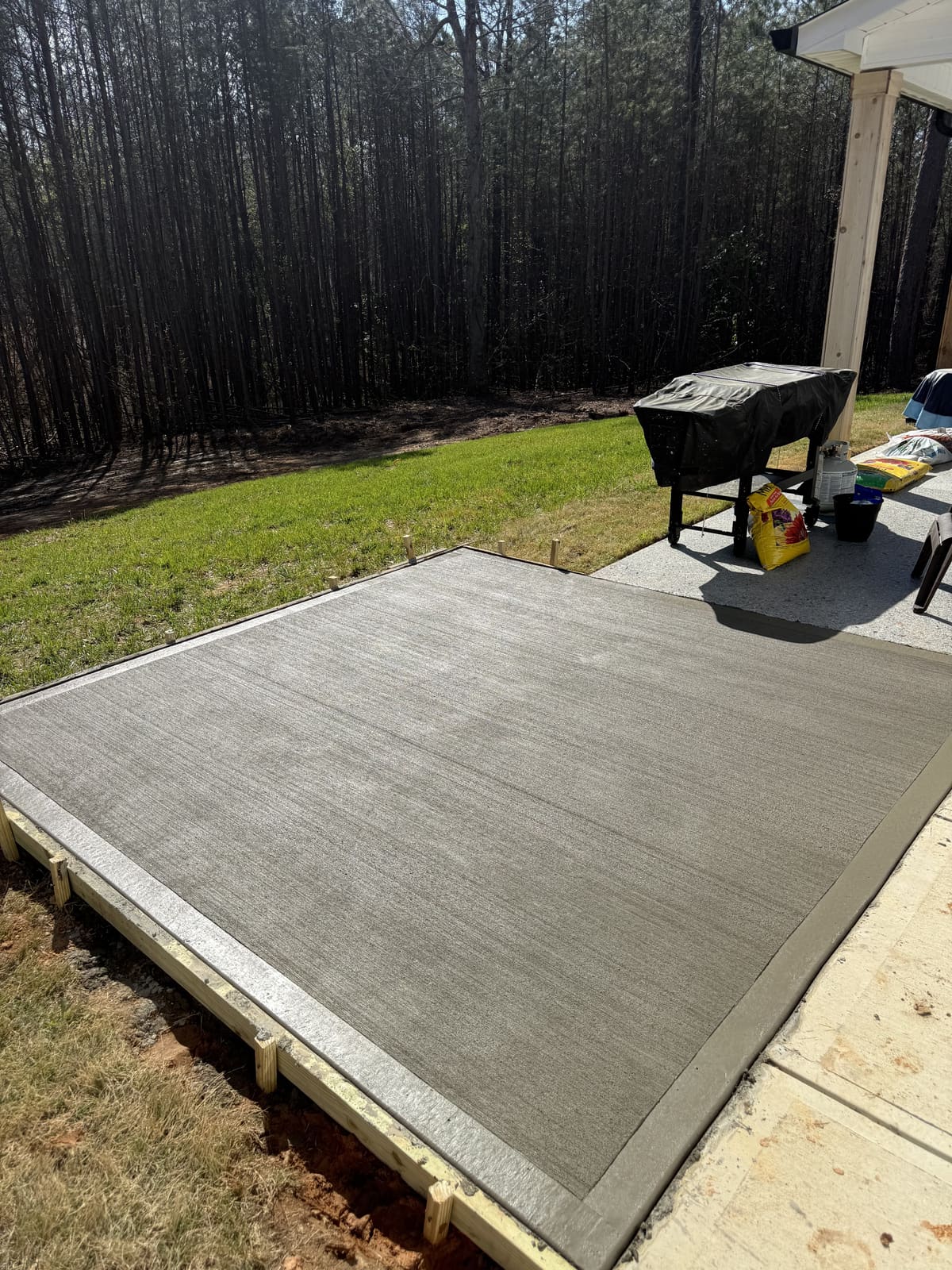
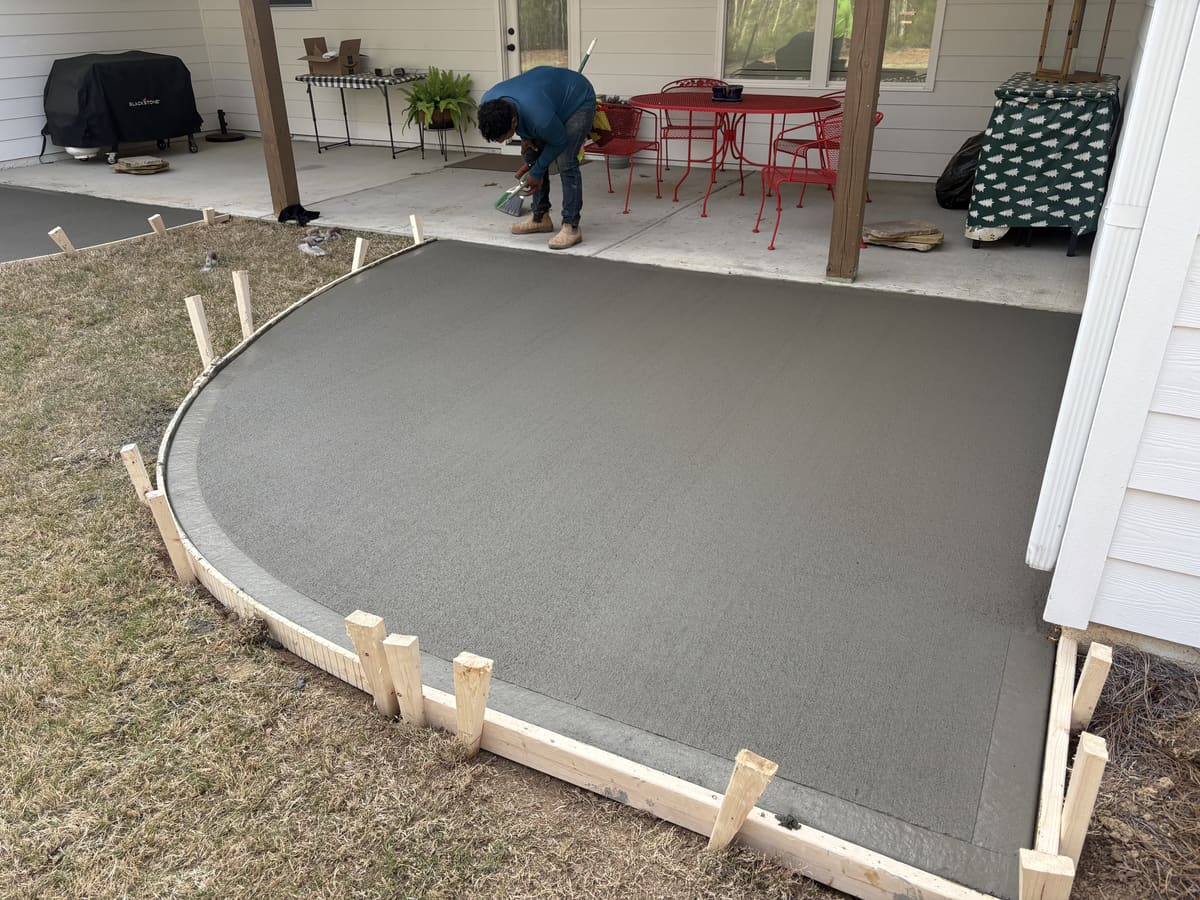
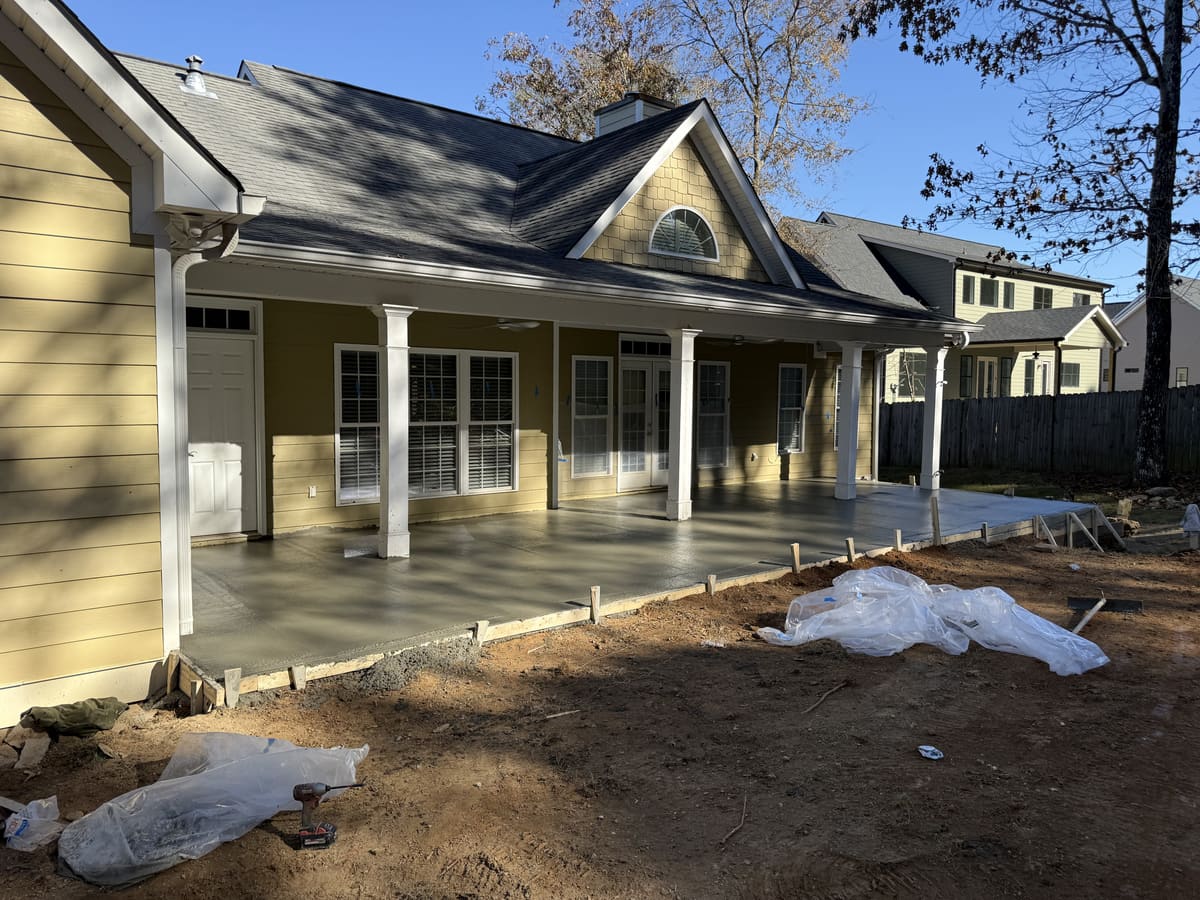
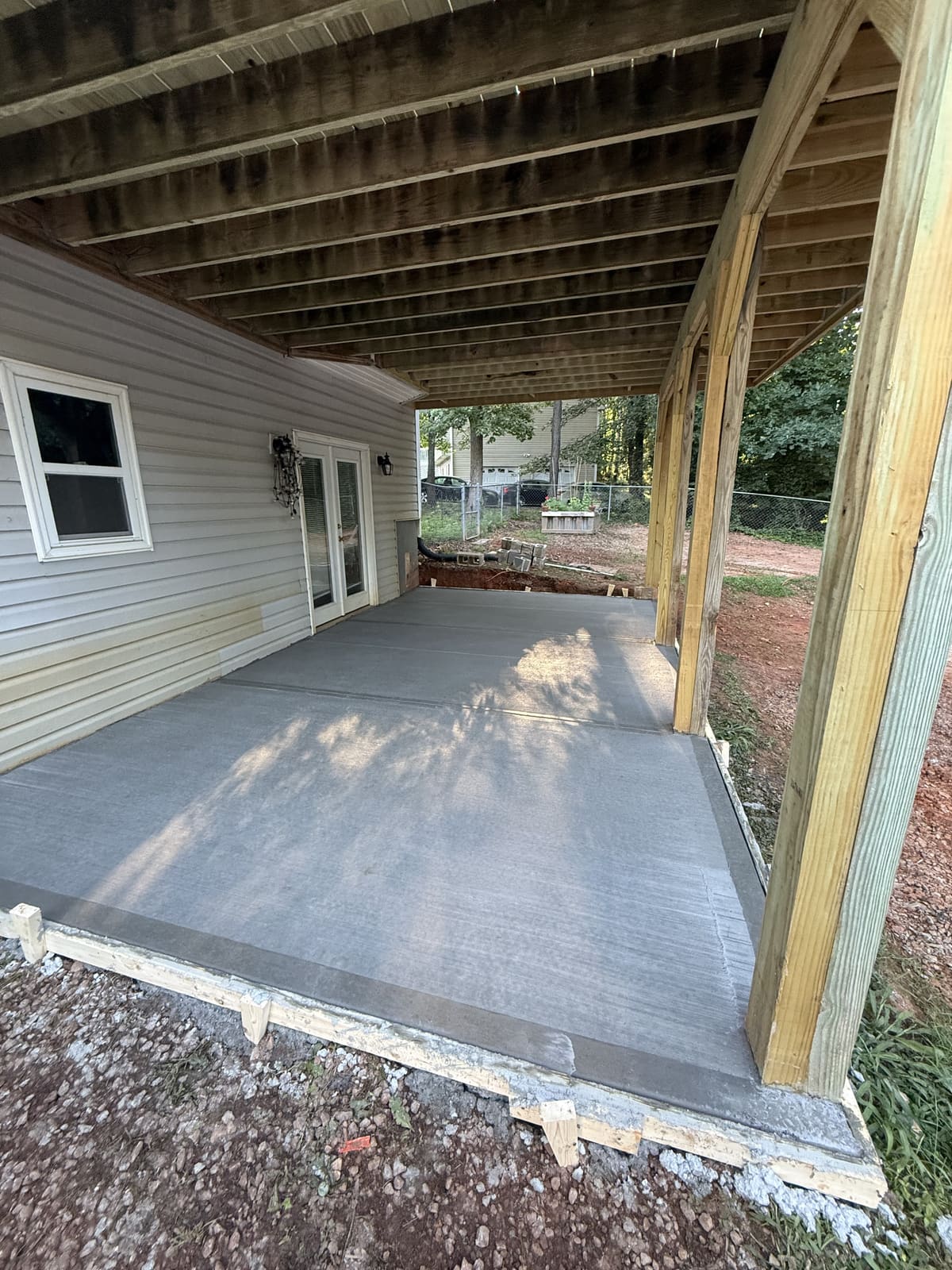
Patios we've poured
Where we pour concrete patios
Every town we serve in Georgia and Alabama.
Georgia
Ready to size a patio for your backyard?
Send the details and we'll get back to you about an estimate.
(762) 842-4822Call or text, whichever is easier.
Request an estimate
Tell us what you're pouring and where, and we'll get back to you.
Call or text (762) 842-4822 for an estimate.
Thanks, we've got it.
We'll get back to you about your estimate. If it's urgent, call or text (762) 842-4822.