Driveways and walkways
Pavers or concrete for a patio: how they compare
Pavers and poured concrete both make a solid patio, but when something goes wrong, you fix them in very different ways.
Updated September 25, 2026
How a paver patio is built, joint by joint
A paver patio goes down as individual concrete or brick units, set into a bed of compacted sand or gravel with narrow joints between each one, usually filled with more sand or polymeric jointing sand. That piece-by-piece construction is what gives pavers their biggest advantage: a cracked, stained or sunken paver comes out and a new one goes back in, without touching the rest of the patio.
Those same joints are also where weeds and ants tend to move in over time, and where the jointing sand needs topping off every so often to keep them from opening up.
What you get with a single poured concrete slab
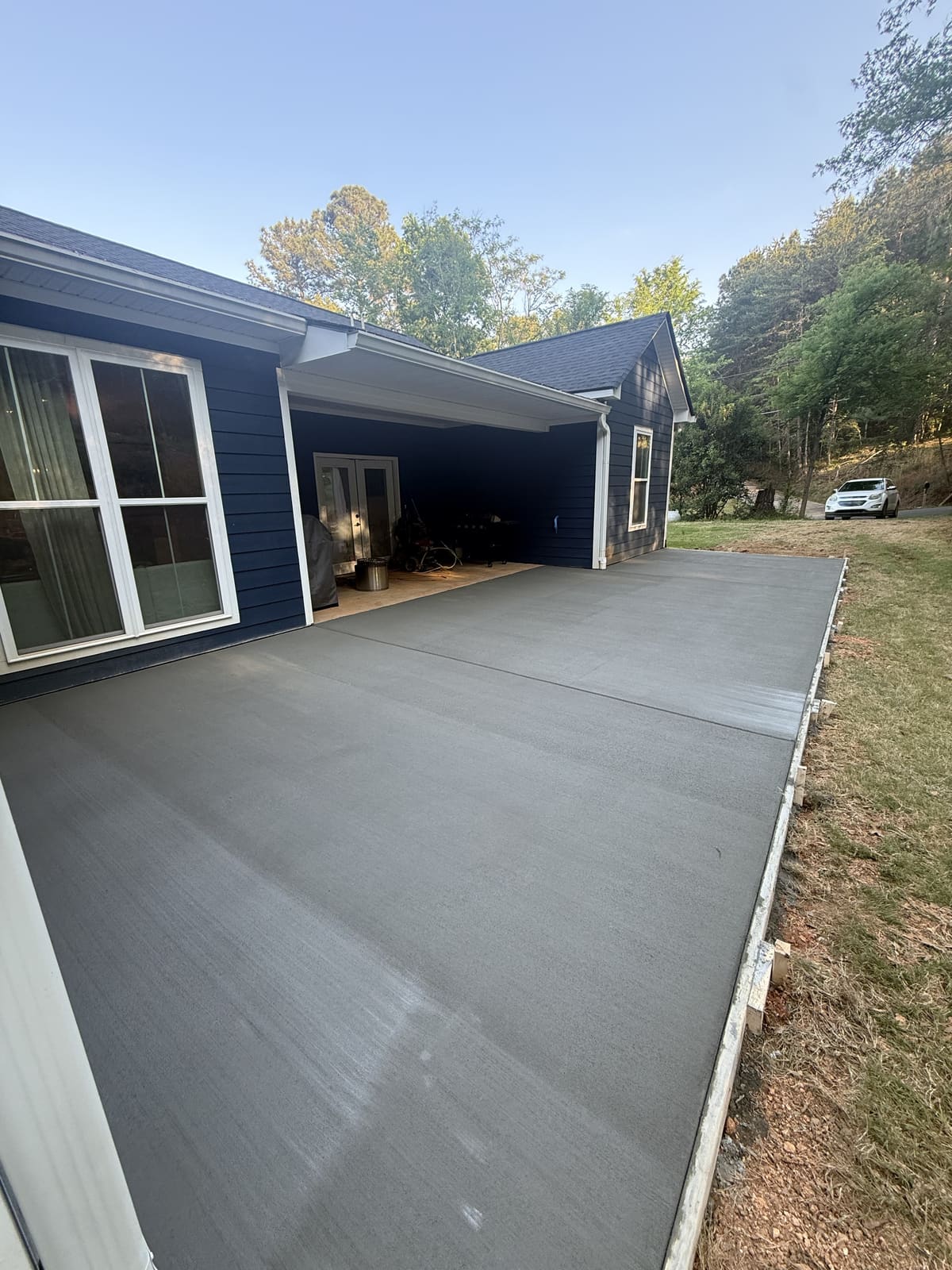
A poured patio goes down all at once, as one continuous slab with control joints cut in to guide where it cracks if it does. There's no piecing it back together after the fact.
A damaged section usually means patching a slab that never quite matches the surrounding concrete in color or texture. That's the trade-off for a surface that has no joints for weeds or shifting to work through in the first place.
What happens when a slab or a paver cracks?
This is where the two really part ways day to day. A single cracked paver is a small, contained fix: pull it, level the bed underneath and drop in a replacement.
A crack in a slab gets sealed or lived with; there's no single piece to swap out.
Which lasts longer, concrete or pavers?
A well-built concrete patio and a well-built paver patio both hold up for decades, so base preparation matters more than the material. Where they differ is in how they age.
Concrete stays put once it's cured. Pavers can shift, settle unevenly or need their jointing sand refreshed over the years, even without ever truly failing.
Stamped concrete: the middle ground between the two
Stamped concrete presses a pattern into a poured slab before it sets, copying the look of pavers, brick or natural stone without the individual joints. It's still one continuous slab underneath, so it behaves like concrete for repairs and lifespan.
That said, it closes a lot of the visual gap with pavers that a plain broom finish doesn't. Our stamped concrete patterns guide goes through the pattern and color choices in more depth.
Choosing between pavers and concrete for your patio
Cost usually settles it once the look and upkeep trade-offs are on the table: a plain slab typically costs the least of the three, pavers cost more for the labor of setting each piece, and stamped concrete lands in between. Our concrete patio cost guide has the actual ranges for Georgia.
From there, an estimate is mostly a matter of telling us the space and the look you're after, and our concrete patios page has the details on that work.
What else do people ask about pavers and concrete?
What lasts longer, a concrete patio or a paver patio?
Both, when the base underneath is right; a well-built patio of either material can last decades. The difference shows up along the way: pavers need occasional resetting, while a poured slab just sits there until something cracks it.
What are the downsides of concrete pavers?
The joints between pavers open the door to weeds, ants and shifting sand that needs topping off now and then. Pavers can also settle unevenly over time, and a large paver patio costs more than a poured slab of the same size, because of the labor in setting each piece by hand.
Is stamped concrete cheaper than pavers?
Usually, yes. Our concrete patio cost guide has the ranges.