Driveways and walkways
Types of walkways, from poured concrete to stepping stones
The main types of walkways are poured concrete, stamped concrete, pavers, flagstone, gravel and stepping stones, and the right one depends on how much traffic a path sees and what it connects.
Updated September 25, 2026
Poured concrete and stamped concrete walkways
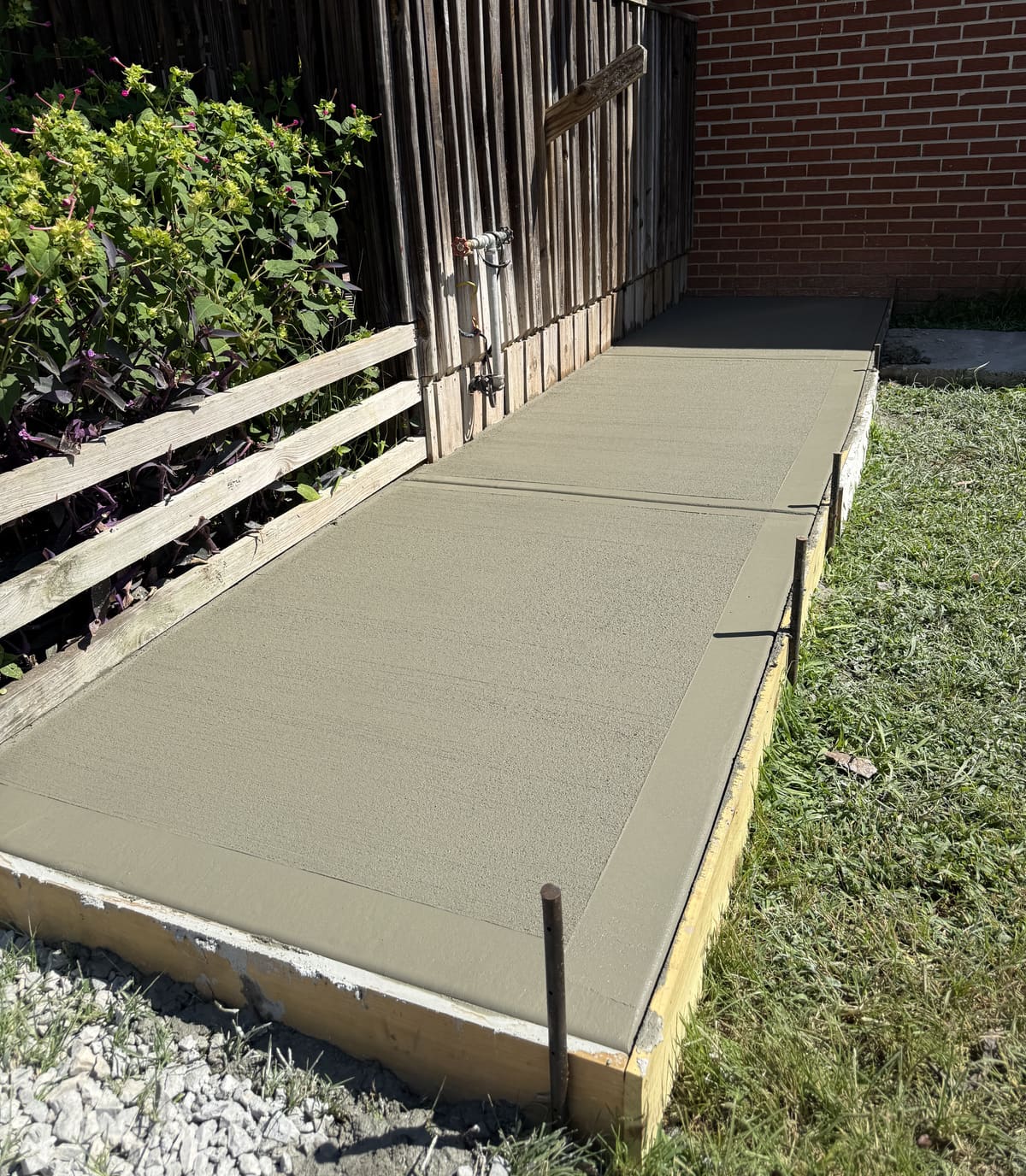
A poured concrete walkway holds up the same way a driveway does, just at a lighter duty: a walkway usually gets poured thinner, since it only has to carry foot traffic instead of vehicles. No joints for weeds to work through, no pieces to reset, and years of use before it needs any attention. Stamped concrete does the same job while pressing in a pattern that reads more like stone or brick. Our types of driveways guide covers the same broom, exposed aggregate and stamped options in more depth.
Pavers, flagstone and stepping stones
Pavers set a walkway piece by piece, the same way they do a patio or a driveway. Our pavers vs. concrete guide covers how that compares with a poured surface. Flagstone uses large, irregular natural stone pieces instead, set into sand or mortar with wider, more organic joints between them. Stepping stones space individual pavers or flat stones apart in lawn or mulch, rather than joining them into a continuous surface. They suit a casual path that only carries foot traffic now and then.
Why a walkway sometimes needs a step, not just a slope
A walkway can slope gently to follow a yard's grade, but the steeper it gets, the more uncomfortable it is to walk and the more it can turn slick when it's wet, especially over a short run. That's usually where a step, or a short run of them, makes more sense than stretching a ramp-like slope across the whole distance. Where steps go in, and how many, comes down to how much the grade actually changes between the two points the walkway connects.
When does a gravel walkway make sense?
Gravel works fine for a walkway that sees light, casual use, like a path through a garden or out to a shed. Edging helps keep the stone from spreading into the lawn. It costs less than any poured or set surface, and it's simple to widen or reroute later. It's a worse fit for a main entry walkway that sees daily foot traffic, strollers or wheelchairs, where a stable, even surface matters more.
What should a walkway match?
Usually it matches whatever it connects to, in material or at least in finish: a stamped walkway next to a stamped patio, plain concrete alongside a plain driveway. Tell us what the walkway connects, the driveway to the front door, say, or the patio to the yard, and we'll suggest a finish that matches. Our concrete flatwork page covers walkways alongside the sidewalks, pads and steps we pour.
What else do people ask about walkways?
What is the most affordable walkway?
Gravel costs the least to put in, followed by poured concrete, then pavers or flagstone, which cost more because of the labor in setting individual pieces. A basic broom-finished concrete walkway is usually the more affordable choice among the surfaces that don't need regular upkeep.
What are some options for a backyard walkway?
Poured concrete, stamped concrete, pavers, flagstone, gravel and stepping stones all show up in backyards, and a casual path to a garden or a shed doesn't need the same surface as a main entry walkway. Stepping stones or gravel suit a light-use path well, while concrete or pavers make more sense somewhere that sees daily traffic.
How wide should a walkway be?
A walkway built for one person at a time usually runs about 2 to 3 feet wide, and one meant for two people side by side, like a main entry path, usually runs closer to 4 to 5 feet. A secondary path to a side yard or a garden can stay on the narrower end.