Concrete slabs and flatwork: sidewalks, pads and steps
Flatwork covers the small, everyday concrete pours around a property: a concrete slab or pad for a shed, an AC unit or a hot tub, plus sidewalks, walkways and steps. Most of these jobs are smaller than a driveway or a foundation, but they still need the right base and finish.
Get an estimate
Tell us what you're pouring and where, and we'll get back to you.
Call or text (762) 842-4822 for an estimate.
Thanks, we've got it.
We'll get back to you about your estimate. If it's urgent, call or text (762) 842-4822.
What counts as concrete flatwork
Flatwork is everything that isn't a driveway, a patio or a full foundation. A slab under a shed, a pad for an AC unit or a hot tub, a spot for the trash cans, plus sidewalks, walkways and steps all fall under it.
None of these are complicated structurally. A full hot tub is a lot of concentrated weight sitting in one place for good, while a sidewalk just needs to take feet, day after day, for years.
These jobs are usually smaller and quicker than a driveway or a foundation pour, but they still need forms, a prepped base and the right finish for what's going to sit on or walk across them.
How a small concrete slab or pad gets poured
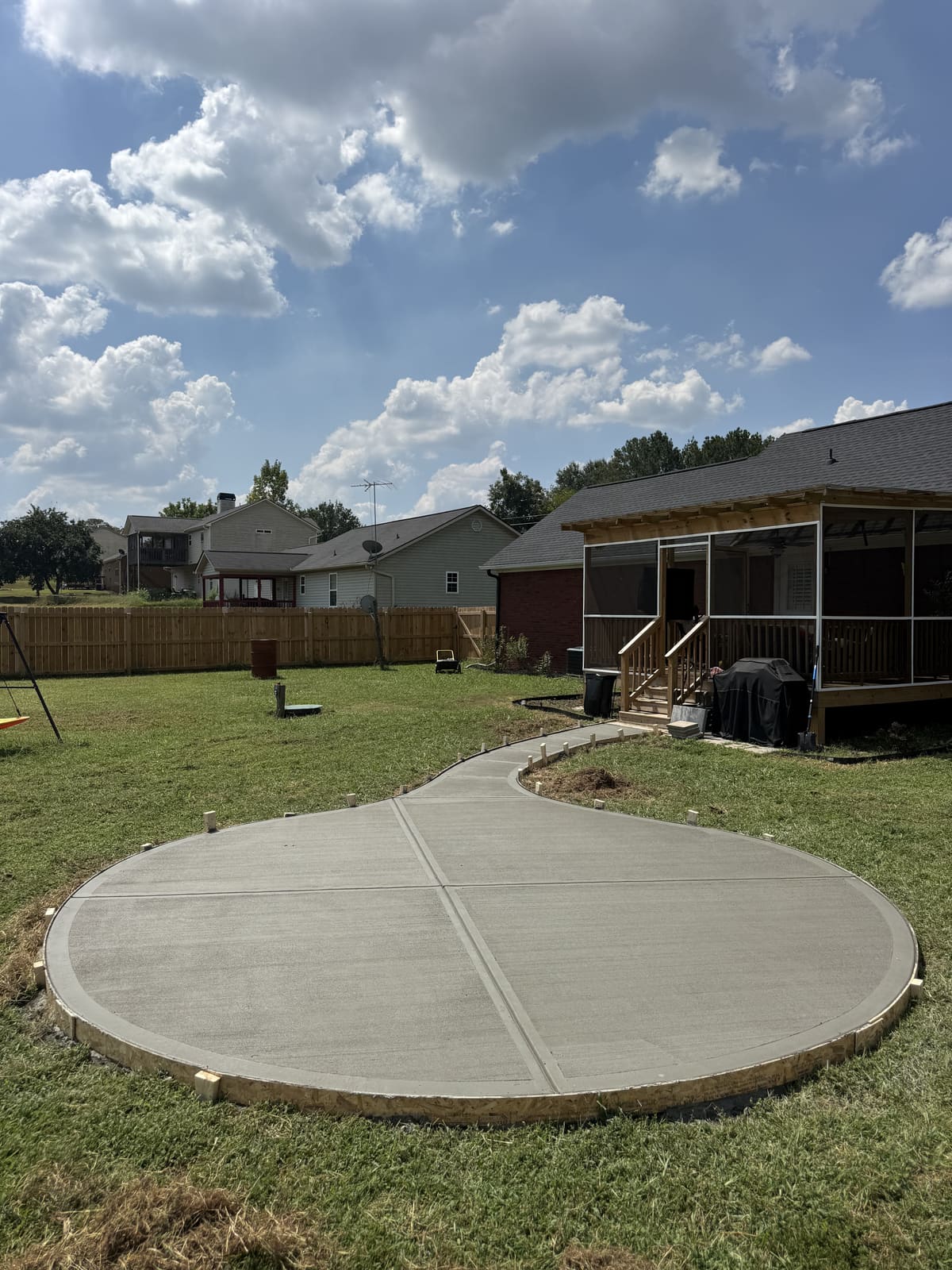
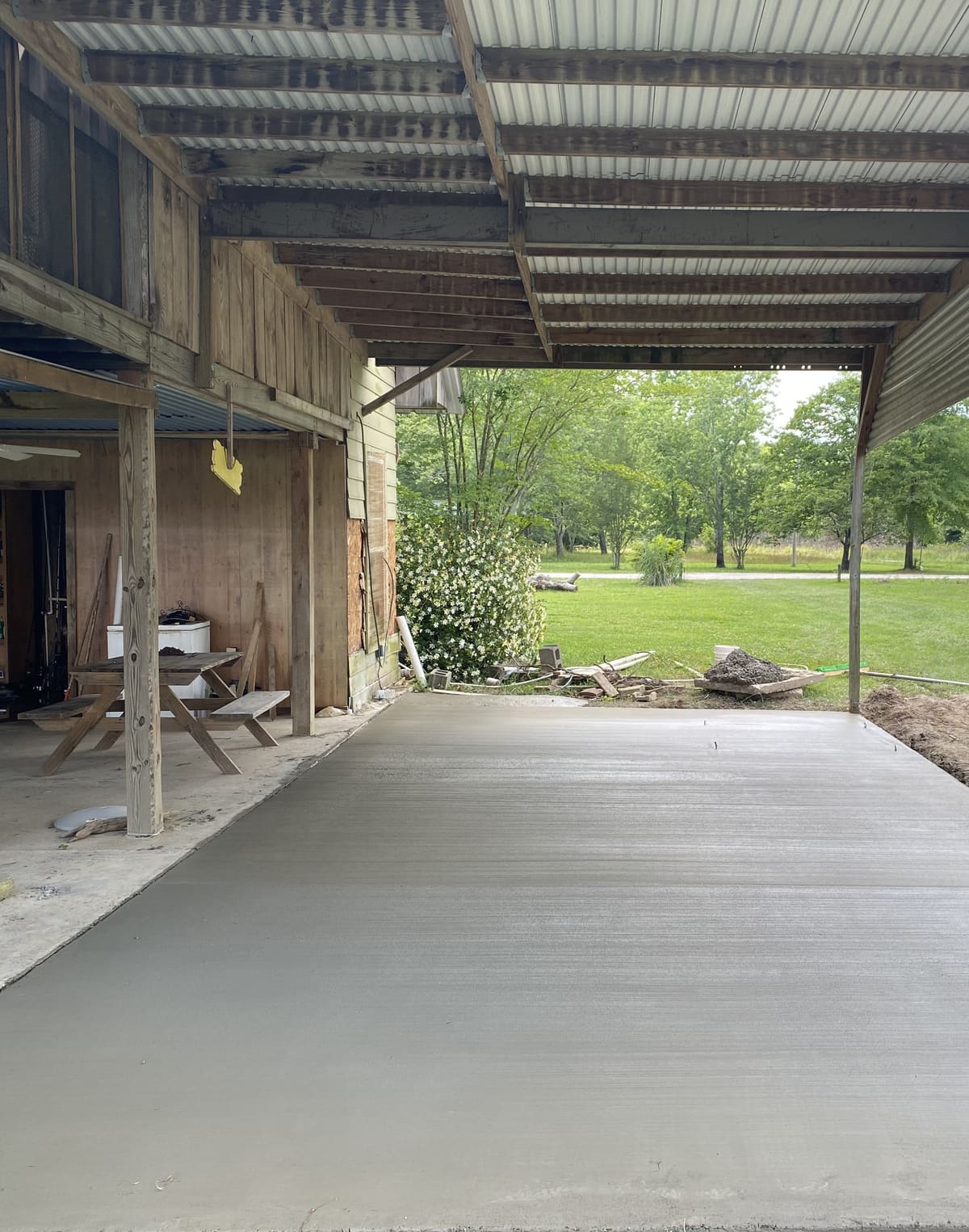
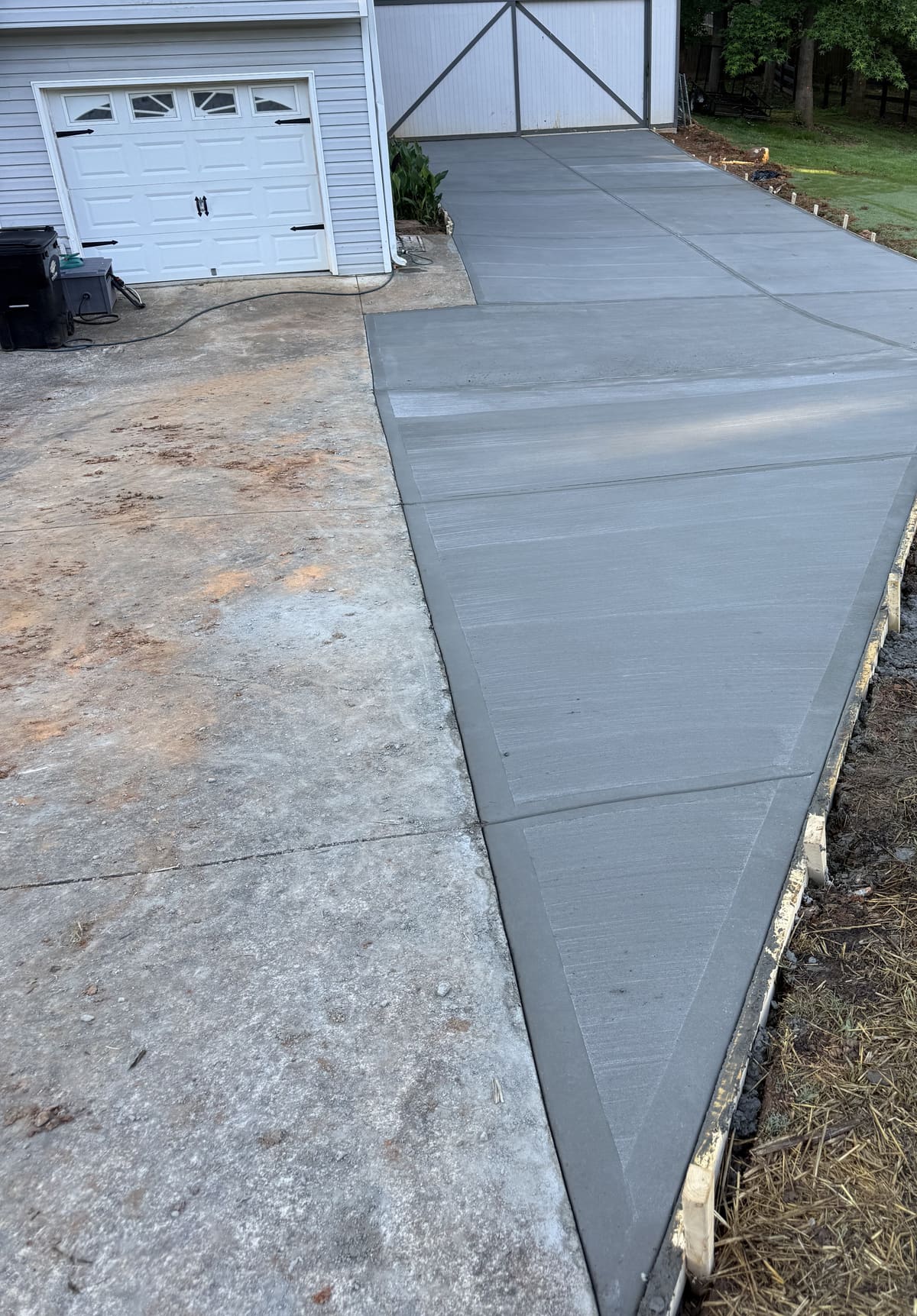
A small slab starts the same way a bigger one does. Forms go in to hold the shape, the ground underneath gets prepped, and the concrete gets poured, screeded flat and floated smooth before it's finished.
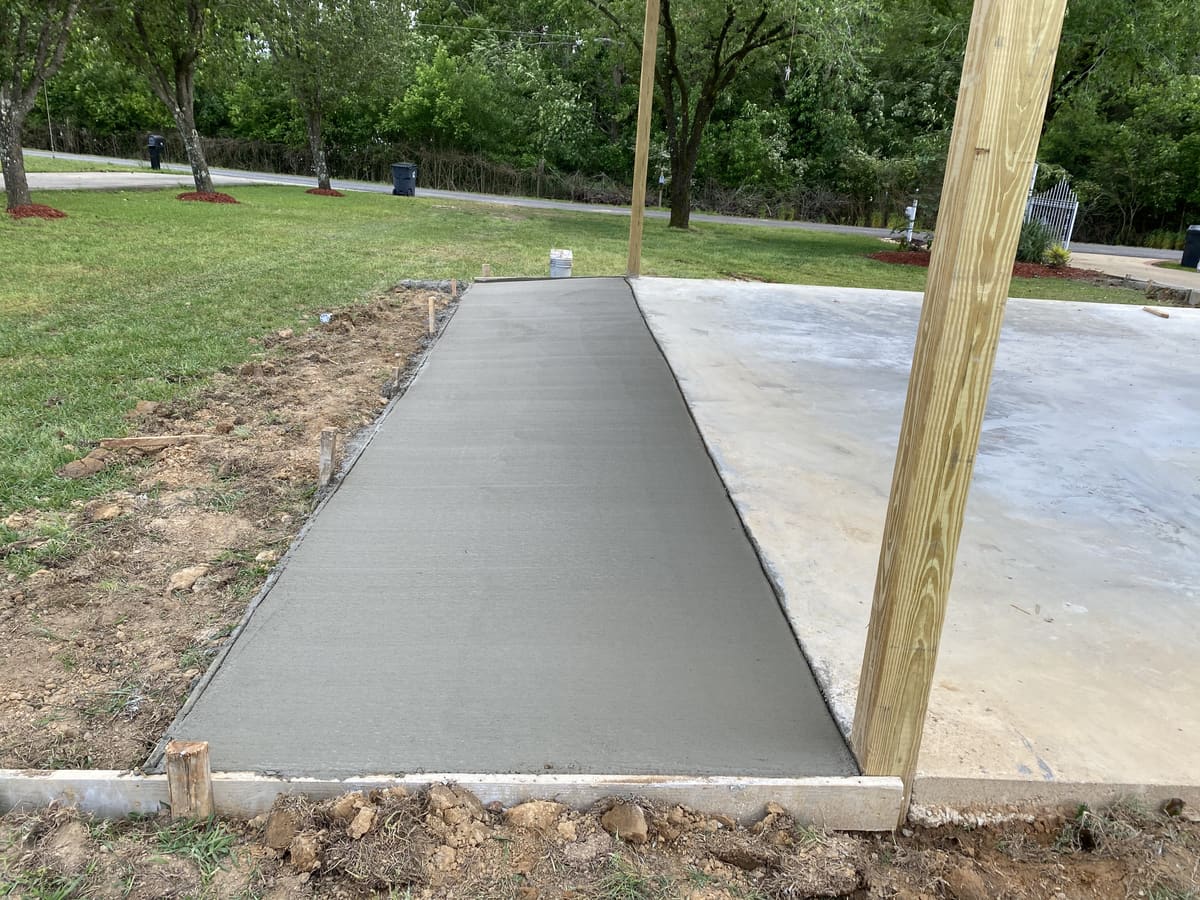
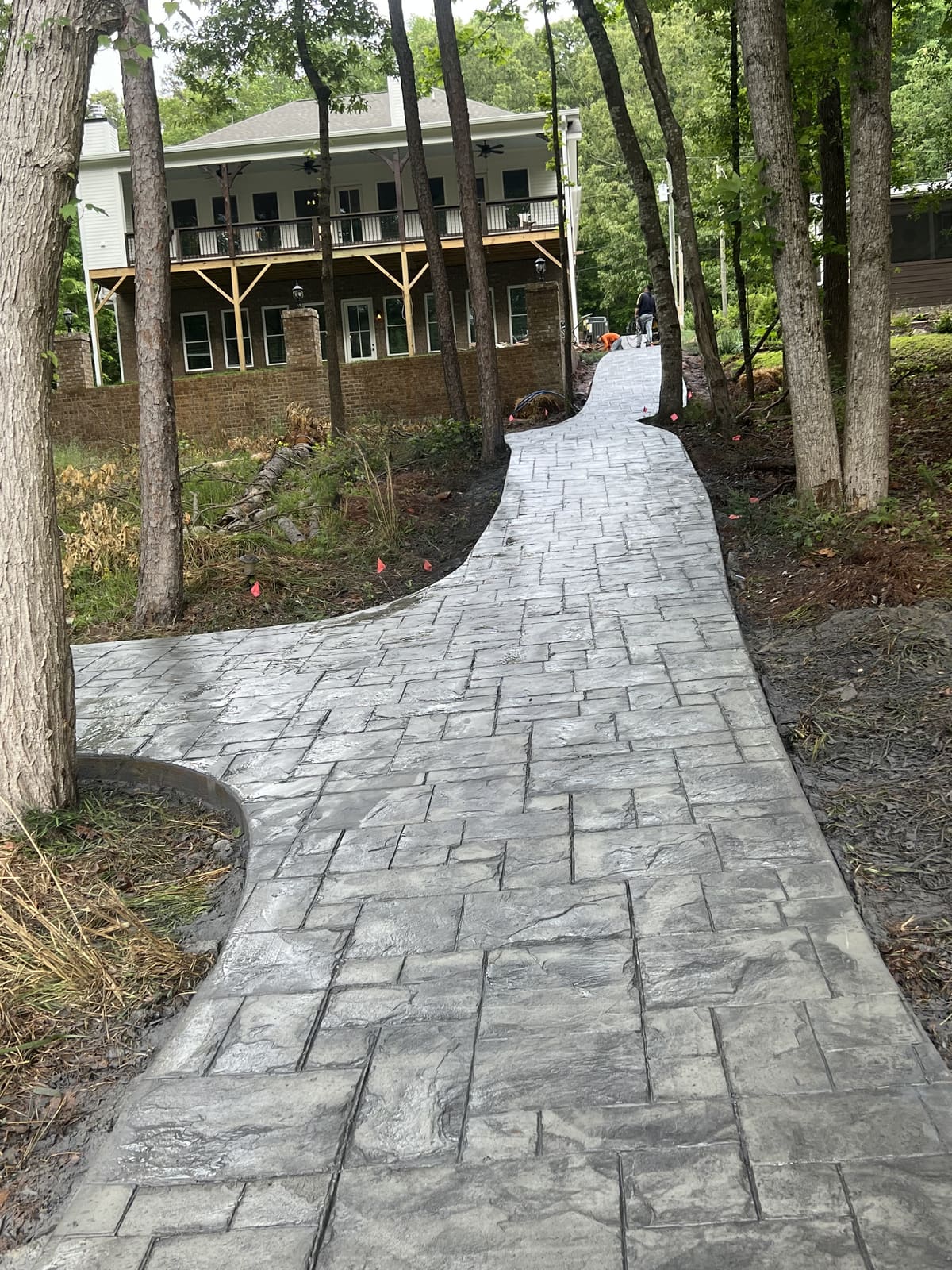
An AC pad or a shed slab is usually a simple square or rectangle, which makes it one of the more straightforward pours we do. A sidewalk or walkway is different mainly in shape: it's long and narrow, poured in sections with joints between them so it can move a little without cracking straight across.
A hot tub pad carries more concentrated weight than most flatwork once it's full of water and people, more than a standard patio slab typically sees.
How thick does a concrete walkway need to be?
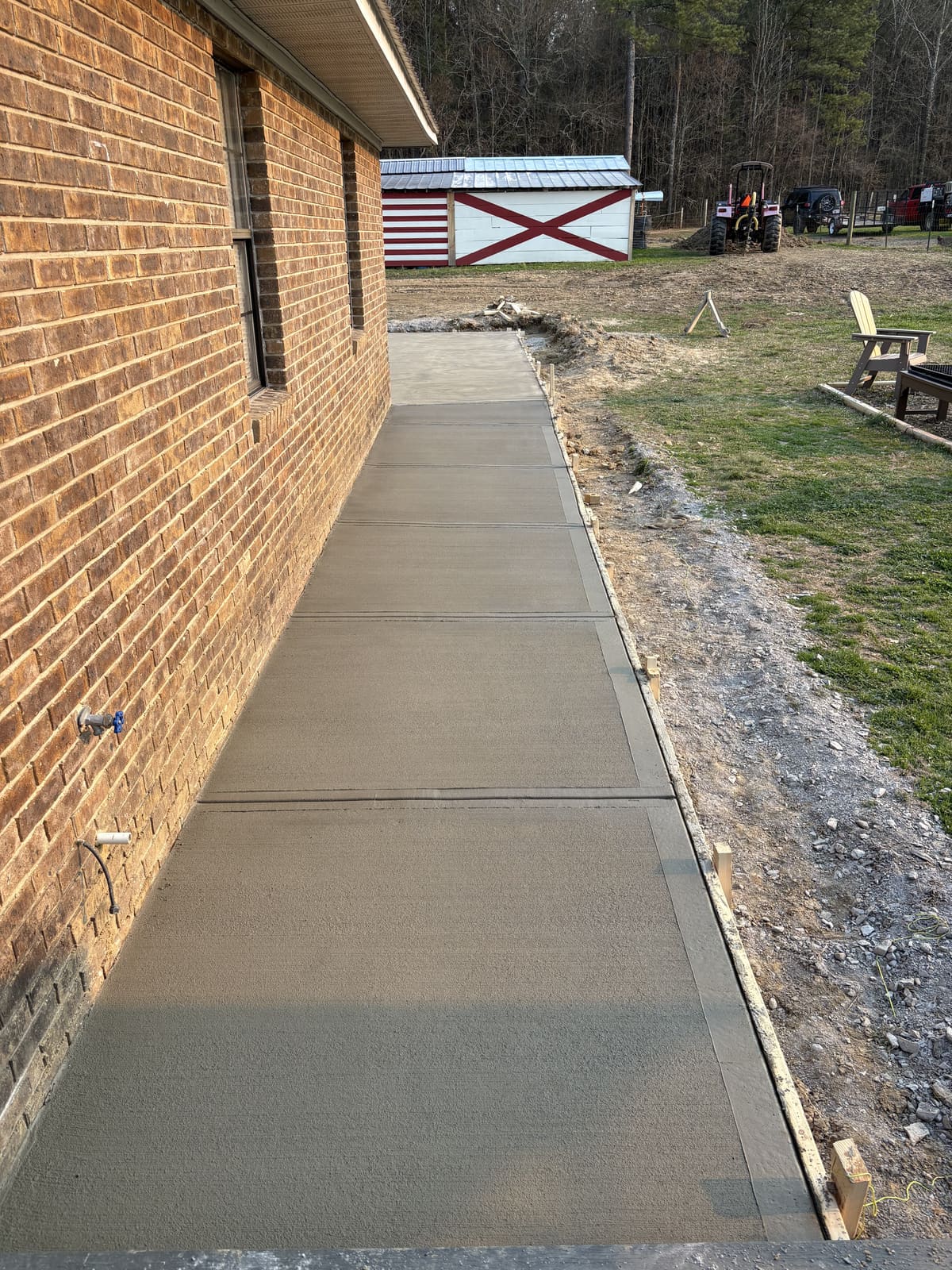
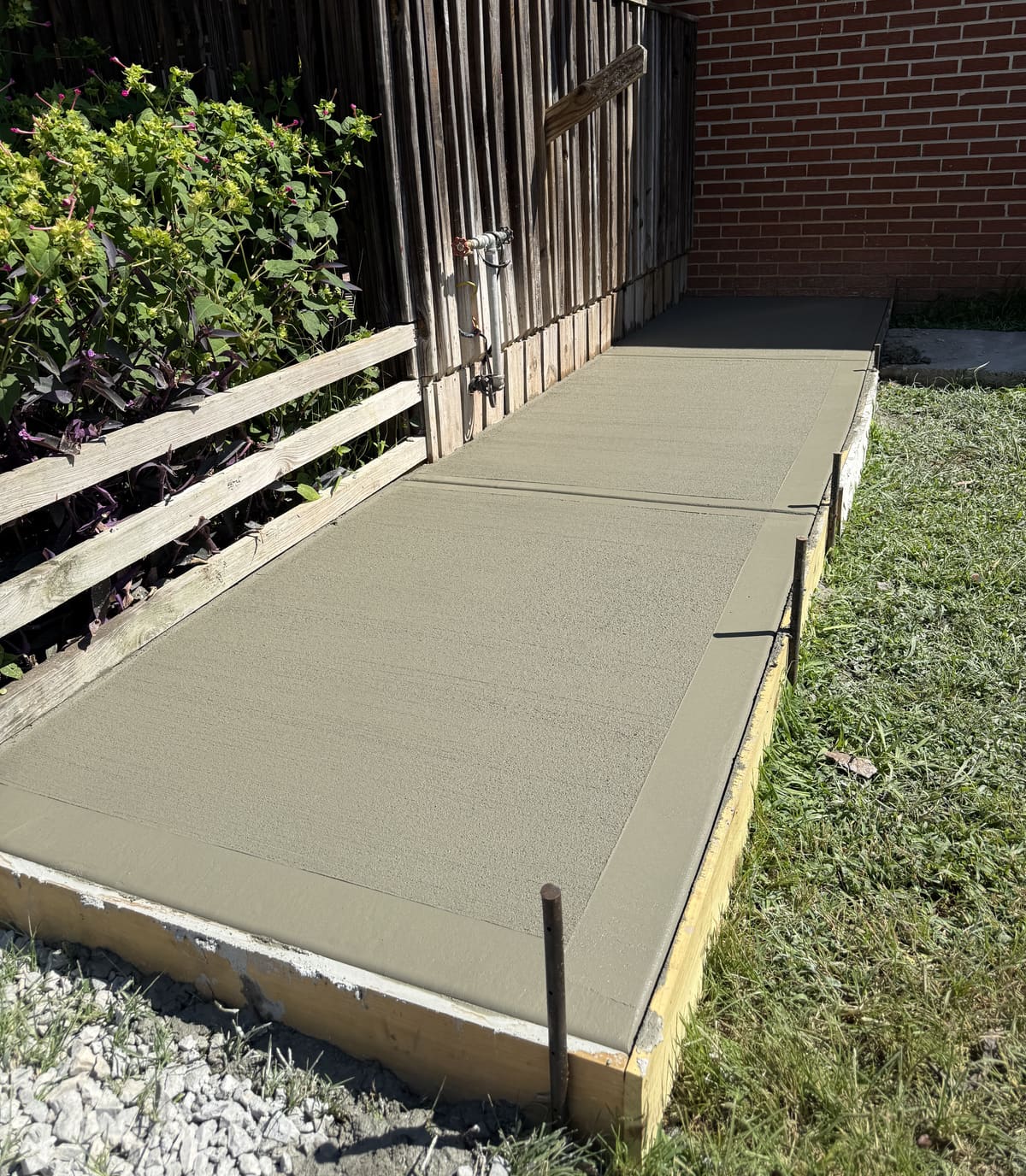
A walkway or sidewalk carries foot traffic, not vehicles, so it doesn't need to be as thick as a driveway. Most poured sidewalks run close to 4 inches thick, though the right number for a given walkway depends on the soil underneath and what it borders.
The same goes for a pad under a shed, an AC unit or a hot tub. The load sitting on it and the ground underneath both factor into what a slab like that actually needs.
Broom finish or smooth finish for flatwork
A broom finish is the common choice for anything people walk on regularly, like a sidewalk or a walkway, since the texture keeps it from getting slick when it's wet.
A smooth, troweled finish shows up more on a slab that won't see much foot traffic, like a pad under an AC unit. Steps usually get a broom finish too, for the same grip a walkway needs.
A small utility pad, like a spot for trash cans or a propane tank, usually gets whatever finish matches the area around it. It's rarely a surface anyone spends much time standing on.
Concrete steps, poured in place
Steps get poured as part of a walkway, a porch, or wherever a change in grade needs one, formed and finished to match the slab or walkway they lead to.
Pouring steps in place lets them fit the exact rise and run the site needs instead of settling for a standard precast size. That matters more on an uneven site than it does on a flat one. Depending on the rise, a set of steps may also need a handrail to meet local code, which is worth checking before the forms go in.
Our concrete calculator can help you work out roughly how much concrete a small pour like this takes. Our concrete slab cost guide covers typical price ranges for flatwork by size, and for sidewalks and walkways specifically, our guide to types of walkways compares poured concrete against pavers, gravel and other options. Not sure concrete and cement are the same thing? Our concrete vs. cement guide covers what's different between them.
Send us the details of your flatwork project and we'll follow up on an estimate.
Questions about slabs and flatwork
Is 2 inches of concrete enough for a sidewalk?
Most poured sidewalks run closer to 4 inches thick, since a thin slab is more prone to cracking under freeze and thaw or heavy use. The soil underneath and what the walkway needs to carry both factor into the right thickness for a given job.
When should concrete get a broom finish?
A broom finish makes sense anywhere people or vehicles need traction: driveways, sidewalks, walkways, steps and most patios. It's the default finish for anything that gets walked or driven on regularly, especially when it might get wet.
Is a broom finish better than a smooth finish?
Neither one is better outright; they suit different spots. A broom finish grips better underfoot, which matters most outdoors, while a smooth finish looks cleaner on a slab that stays dry and doesn't see much foot traffic.
Can you buy concrete steps already made?
Yes, precast concrete steps are available and can work for a simple, standard-size spot. Steps poured in place cost more but fit the exact rise, run and width the site calls for, which matters more on an uneven or nonstandard entryway.
Walkways and flatwork we've poured
Where we pour slabs and flatwork
Every town we serve in Georgia and Alabama.
Georgia
Planning a slab, a sidewalk or a set of steps?
Send the details and we'll get back to you about an estimate.
(762) 842-4822Call or text, whichever is easier.
Request an estimate
Tell us what you're pouring and where, and we'll get back to you.
Call or text (762) 842-4822 for an estimate.
Thanks, we've got it.
We'll get back to you about your estimate. If it's urgent, call or text (762) 842-4822.