
Cost guides
Concrete calculator for slabs, footings and posts
This concrete calculator works out cubic yards and bag counts for a slab, a footing or a round post hole. Plug in your own numbers above, or use the formulas below with a pencil and the same math the calculator runs.
Updated September 25, 2026
How the concrete calculator figures a slab or pad
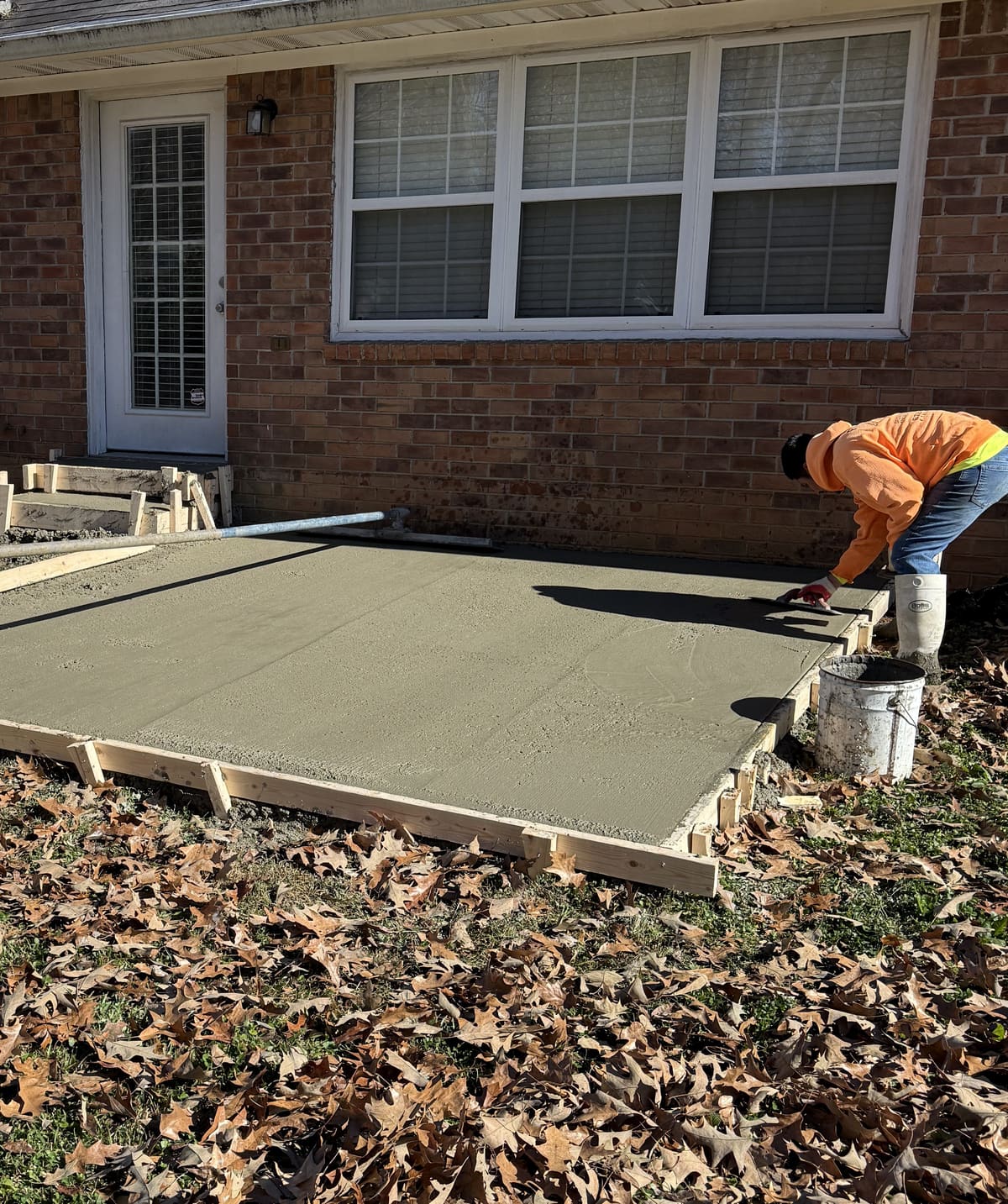
For a slab or a pad, the math is length times width times thickness, all in feet, divided by 27. Thickness in inches just needs to become a fraction of a foot first: 4 inches is 4 divided by 12, or a third of a foot.
Take the calculator's own default numbers: a 20 x 20 slab poured 4 inches thick. Length times width times thickness comes to 133.3 cubic feet; divided by 27, that's about 4.94 cubic yards before waste.
Add the default 10% for waste and it comes to about 5.43 cubic yards, which rounds up to 5.5 since most plants sell concrete in quarter-yard steps. In bags, that same slab takes 245 eighty-pound bags or 326 sixty-pound bags.
How footings and post holes get measured
A footing uses length times width times depth too, just with the width and depth usually given in inches instead of feet. Convert both to feet the same way as thickness above, multiply by the length, and divide by 27.
A 40-foot footing, 16 inches wide and 12 inches deep, works out to about 1.98 cubic yards before waste, or about 2.17 with 10% added, which rounds up to 2.25 cubic yards. That's 98 eighty-pound bags or 131 sixty-pound bags.
A round post hole uses a different formula: pi times the radius squared (half the diameter, in feet) times the depth, divided by 27. A single 12-inch, 4-foot-deep hole comes to a little over 3 cubic feet, about 0.12 cubic yards, or 6 eighty-pound bags.
Setting several posts at once just means multiplying that single-hole figure by how many you're digging. Four holes that size, the calculator's own default, come to about half a cubic yard once waste is added in, which rounds up to 0.75 cubic yards or 24 eighty-pound bags.
Why does the calculator add extra for waste?
Real pours rarely use exactly the calculated volume. Forms leak a little, the subgrade isn't perfectly flat, and some concrete always ends up on the ground instead of in the forms.
A waste allowance of 5 to 10% covers most of that. Bigger or more complicated pours call for the high end of that range, and so does a first order.
It's cheaper to order a little extra than to run short partway through a pour. A second truck for the last few feet of a slab is a much bigger headache than the little extra concrete a bigger waste allowance adds.
How many 80 lb or 60 lb bags of concrete do you need?
A bag's weight matters less than its yield: an 80 lb bag makes about 0.6 cubic feet of concrete once mixed, a 60 lb bag about 0.45 cubic feet.
To get a bag count, turn cubic yards into cubic feet (multiply by 27), then divide by the bag's yield and round up. The same math gives the bag numbers in both examples above.
When the numbers say bags, and when they say a truck
Small totals, under about a yard, usually point toward bags: a post hole, a step, a small patch. Past that, a delivered truck gets the job done faster and more evenly than hand-mixing ever will.
If you're not sure which way yours falls, the yardage and bag numbers above are both worth having in hand before you decide.
Our cost-per-yard guide breaks down what goes into a delivered yard's price once you know how many you need. For what a finished slab costs installed, not just the raw material, see our concrete slab cost guide.
For small pours and pads, see our concrete flatwork page, or tell us about your project directly.
What else do people ask about bags and yards of concrete?
How many 80 lb bags of concrete do I need?
An 80 lb bag yields about 0.6 cubic feet once mixed. Work out the cubic feet you need (cubic yards times 27), divide by 0.6 and round up. A single 12-inch, 4-foot-deep post hole, for comparison, takes about 6 bags.
How much concrete does a post hole take?
See the post hole example above: a 12-inch, 4-foot-deep hole takes about 0.12 cubic yards. Multiply that by the number of holes you're digging, then add the usual waste allowance for your total.
How much extra concrete should I order?
Most orders add 5 to 10% for waste and spillage, and the calculator above defaults to 10%. A small, simple pour can often get by on the low end of that range.