Stamped concrete patios and walkways
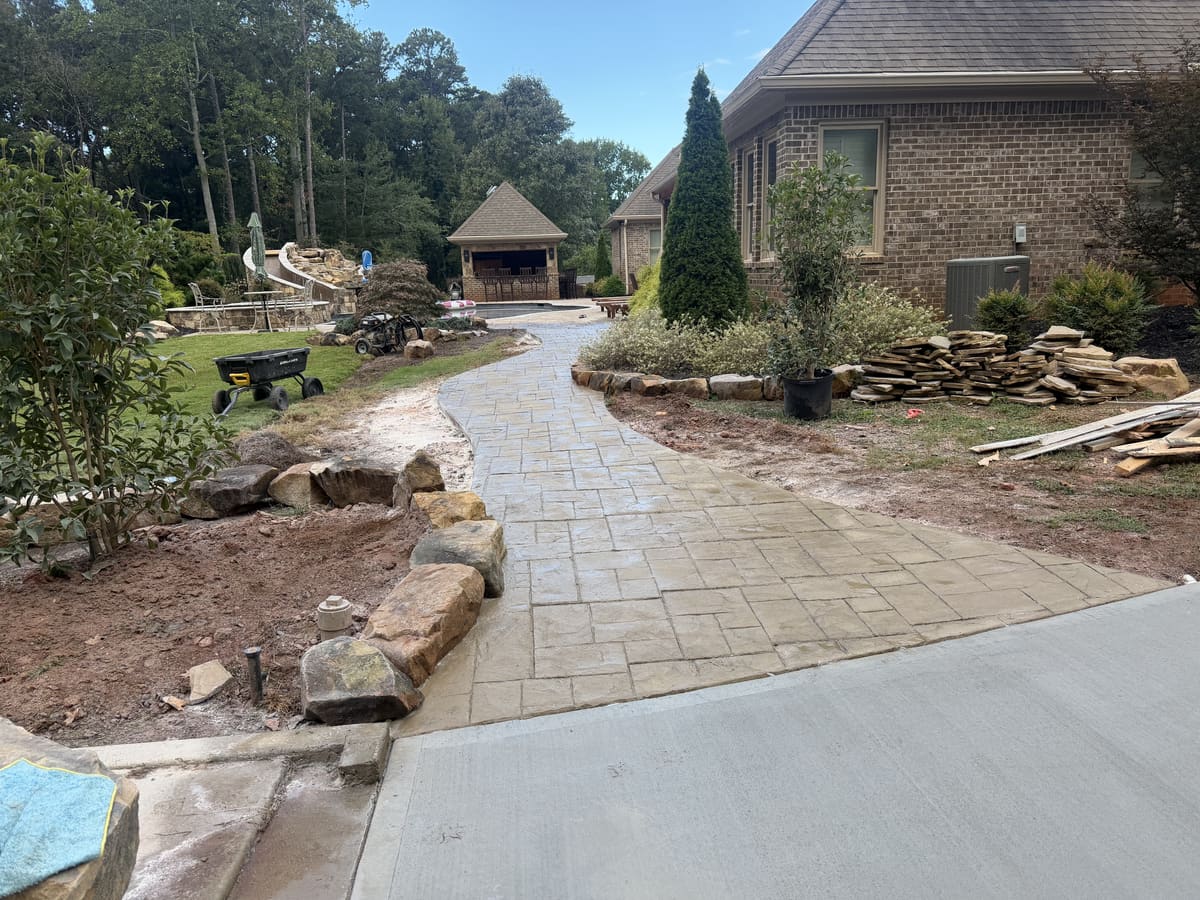
Stamped concrete is poured concrete pressed with a pattern and colored to look like stone, brick or tile. We pour stamped concrete for patios, walkways and pool decks across Northwest Georgia and East Alabama.
Get an estimate
Tell us what you're pouring and where, and we'll get back to you.
Call or text (762) 842-4822 for an estimate.
Thanks, we've got it.
We'll get back to you about your estimate. If it's urgent, call or text (762) 842-4822.
How stamped concrete gets its pattern and color
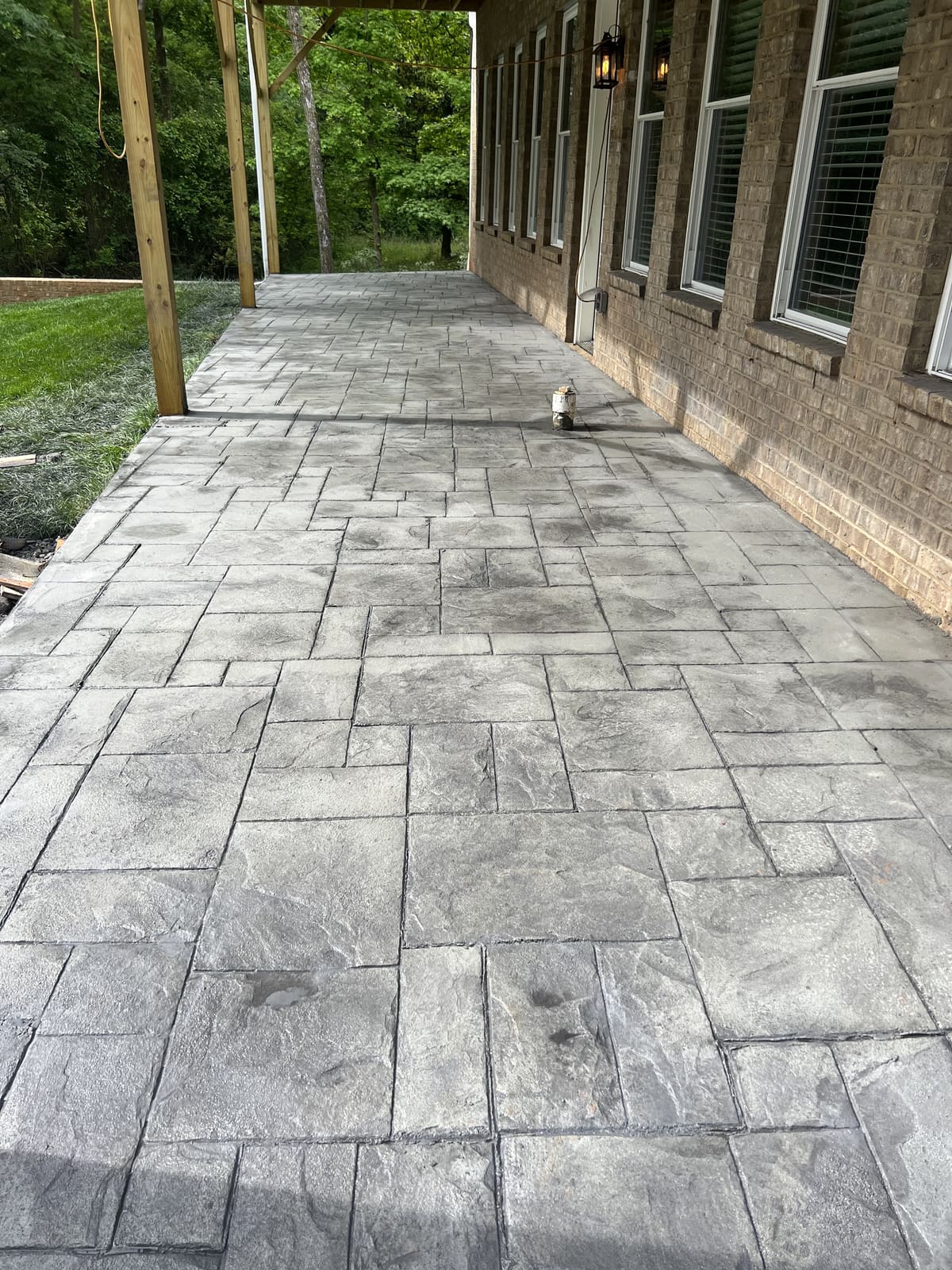
Stamped concrete starts as an ordinary pour. Before it sets up, the surface gets colored and pressed with a texturing tool that leaves behind a pattern, choices like ashlar slate, cobblestone, wood plank or running bond.
Some patterns read as natural stone from a few feet away. Others, like a running bond brick pattern, look more clearly like poured concrete up close, but they still break up a plain gray slab. Picking one usually comes down to matching the house or just personal taste.
A contrasting release color, dusted on before stamping, is another option some homeowners choose for extra depth and shadow in the pattern.
The color can go through the whole mix, get applied as a surface color, or both, depending on the look you're after. Because the pattern goes in while the concrete's still soft, timing matters more on a stamped job than on a plain broom-finished slab.
Where stamped concrete works: patios, walkways and pool decks
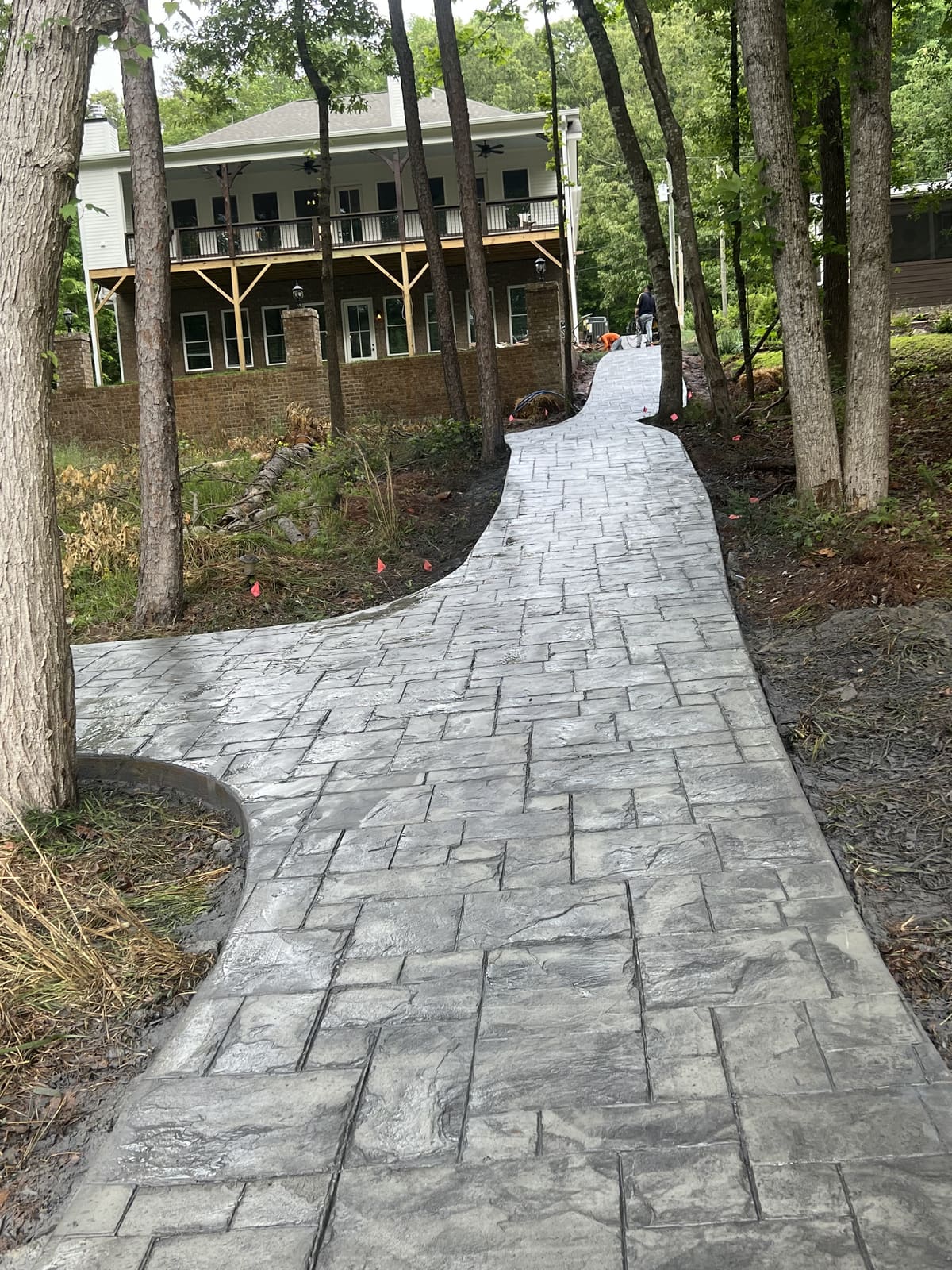
Stamped concrete shows up most often on a patio, where the pattern has room to read as a whole space. It also works well on a walkway, tying the path back to the house with a matching pattern.
A stamped walkway ties back to a stamped patio when the two use the same pattern and color. It makes the backyard read as one project instead of two separate ones stitched together.
Around a pool, a stone or slate look reads better than plain gray concrete, without the upkeep real stone asks for.
Does stamped concrete get slippery around a pool?
A stamped texture actually helps here: the grooves and joints from the pattern give bare, wet feet more to grip than a smooth troweled surface would.
Color matters around a pool too. Lighter colors stay noticeably cooler underfoot in direct summer sun than a dark gray or brown slab, which matters for bare feet on a hot afternoon.
A slip-resistant additive can also go into the sealer on a pool deck for extra traction. Plain or stamped, textured concrete is generally a safer pool deck surface than polished stone or tile.
How often it needs resealing, and what skipping it does
Stamped concrete needs to be resealed every couple of years to protect the color and keep the surface from wearing thin in high-traffic spots.
A fresh coat of sealer also brings the color and sheen back closer to how the concrete looked right after it was finished, since sun and foot traffic dull it gradually between applications.
Skipping that upkeep doesn't damage the concrete right away, but the color fades and the surface can get slick as the sealer wears off. Between resealing, it holds up to regular cleaning about the same as any other outdoor slab.
Stamped concrete compared with pavers and a plain patio
Stamped concrete gets you a stone or brick look without laying individual units. It's one continuous slab instead of hundreds of small pieces that can shift or grow weeds between them over time.
Pattern and color choices also make it easier to break up a large slab visually. A border in a different pattern or color around the field is a common way to do that, and it's not something a single plain pour can do on its own.
Our guide to stamped concrete patterns shows common pattern and color choices side by side. Our pavers vs. concrete guide compares stamped and plain concrete against pavers directly, and our concrete patio cost guide covers what a patio like this typically runs.
If you're picturing a stamped patio, walkway or pool deck, get in touch about the project and we'll follow up.
Questions about stamped concrete
What is the downside of stamped concrete?
It costs more than a plain broom-finished slab, since coloring, stamping and sealing all add steps to the pour. The color can fade some over time too, and getting a later addition to match an older stamped section's pattern and color exactly can be tricky.
How often does stamped concrete need to be sealed?
Most stamped concrete needs to be resealed every two to three years, though a pool deck or a patio that gets heavy sun and foot traffic may need it more often. Checking the color and sheen each spring is a good way to judge if it's due.
What happens if you don't seal stamped concrete?
The color fades and the surface loses its sheen faster without a sealer protecting it. Unsealed stamped concrete is also more open to stains from grease, leaves and dirt working into the surface over time.
Is stamped concrete good for pool decks?
Yes. The texture from the pattern gives bare feet more grip than smooth concrete, and the stone or slate look holds up well around water without the upkeep real stone needs.
Where we pour stamped concrete
Every town we serve in Georgia and Alabama.
Georgia
Want pattern and color on a patio or walkway?
Send the details and we'll get back to you about an estimate.
(762) 842-4822Call or text, whichever is easier.
Request an estimate
Tell us what you're pouring and where, and we'll get back to you.
Call or text (762) 842-4822 for an estimate.
Thanks, we've got it.
We'll get back to you about your estimate. If it's urgent, call or text (762) 842-4822.