Concrete driveways in Cedartown and Northwest Georgia
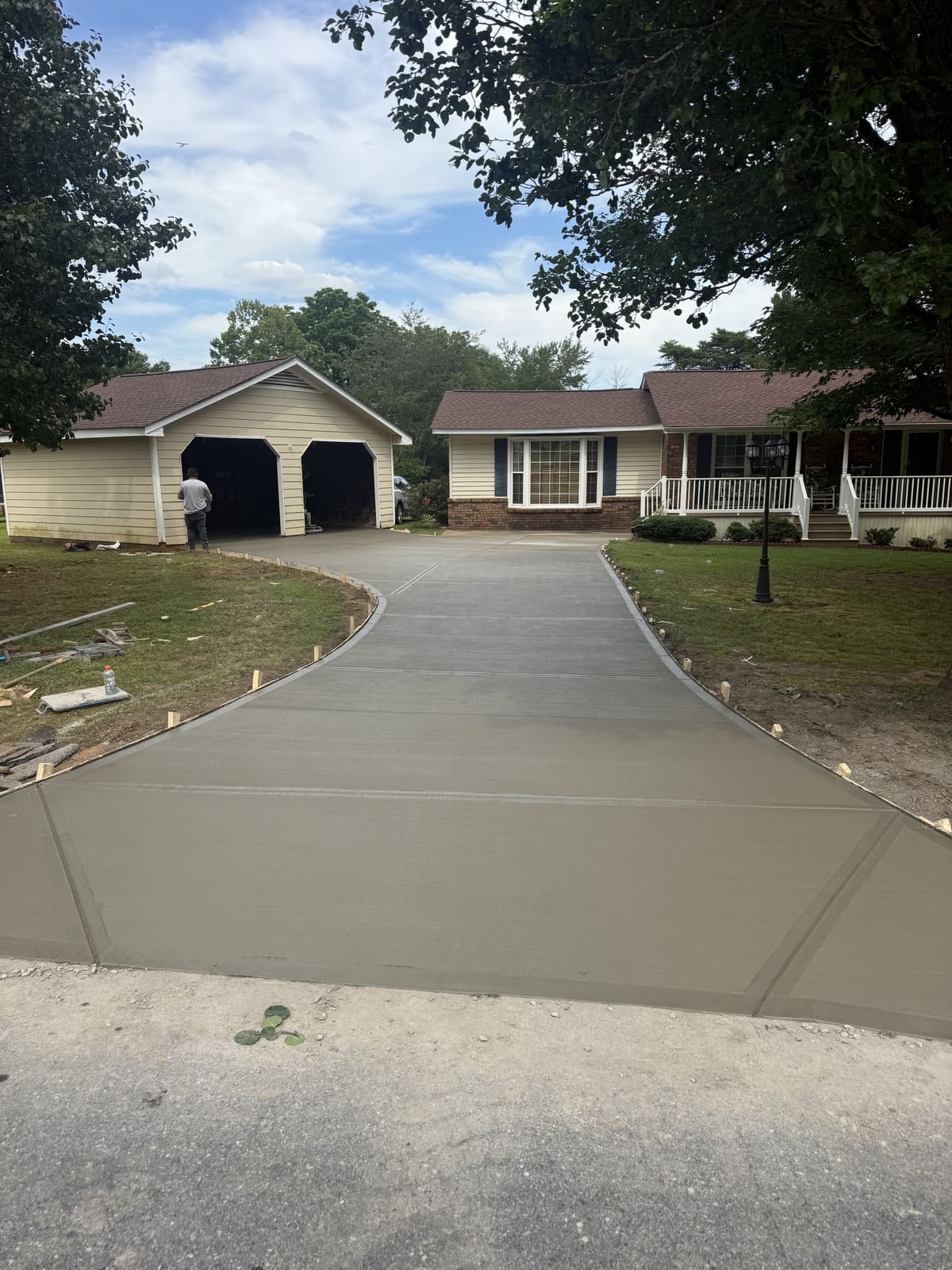
A concrete driveway is a poured slab that takes the place of gravel, dirt or a cracked older drive with one solid surface built to carry vehicles. We pour new driveways and driveway extensions, from widening a narrow drive to adding a parking pad or a turnaround.
Get an estimate
Tell us what you're pouring and where, and we'll get back to you.
Call or text (762) 842-4822 for an estimate.
Thanks, we've got it.
We'll get back to you about your estimate. If it's urgent, call or text (762) 842-4822.
What counts as a concrete driveway job
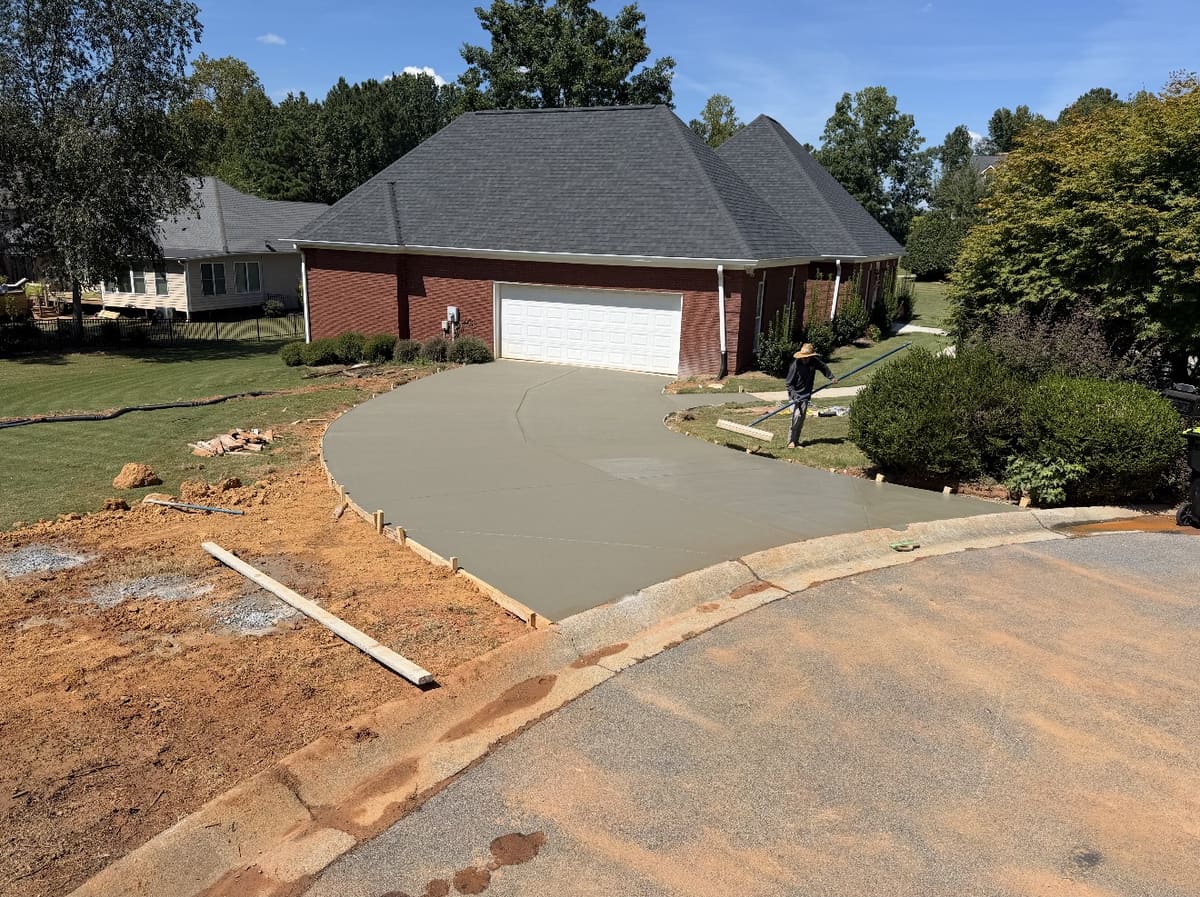
Most of the driveway work we do is one of two things: a brand new driveway poured where there wasn't one, or an addition to a driveway that's already there. An addition might mean widening a drive that's too narrow for two vehicles to pass, pouring a parking pad off to the side, or adding a turnaround so you're not backing all the way out to the road.
If there's an old driveway, a slab or a stretch of gravel already on the site, let us know about it when you reach out. What's there now affects how a new pour ties in and what the ground needs before work can start.
Forms, base and thickness: how the pour comes together
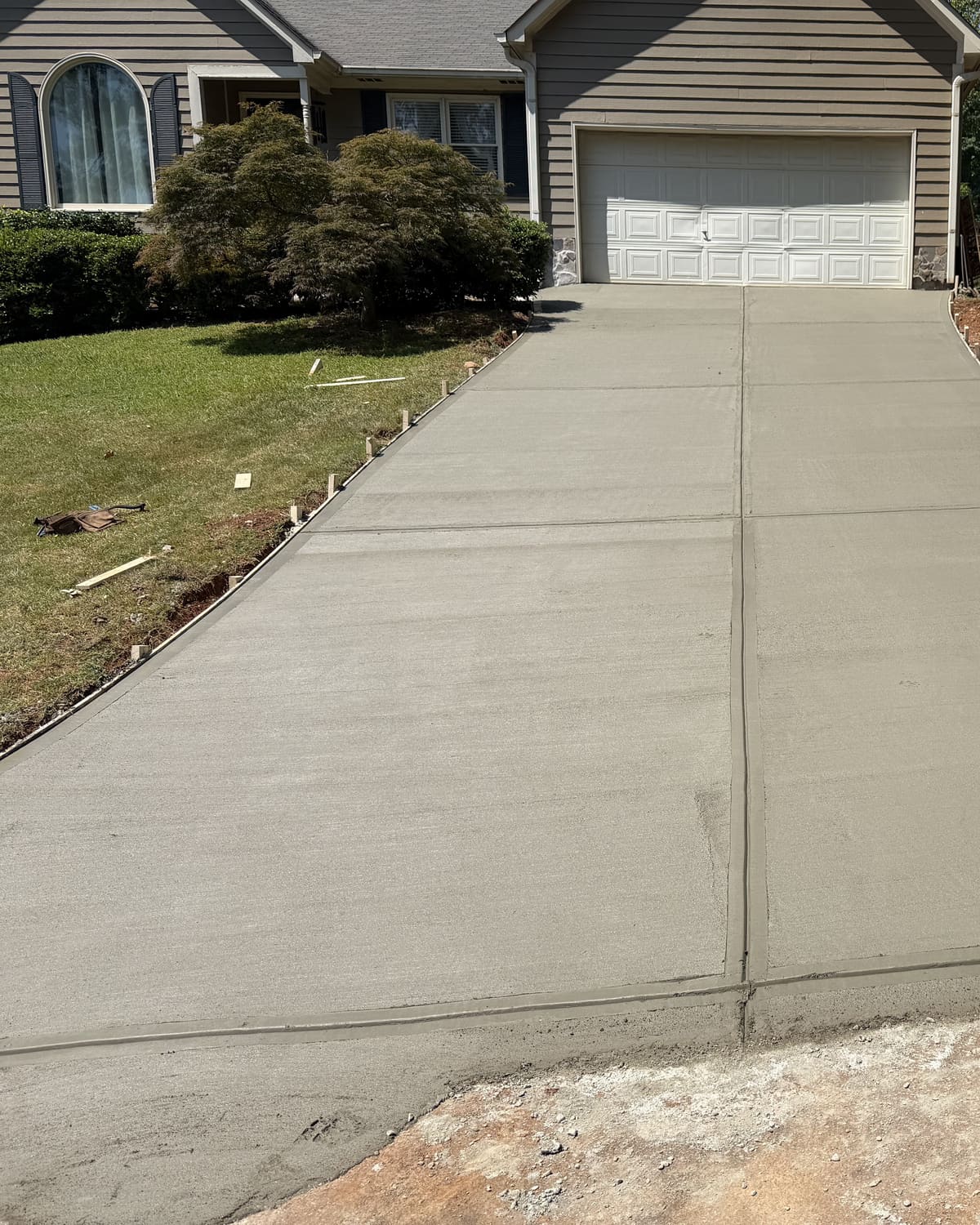
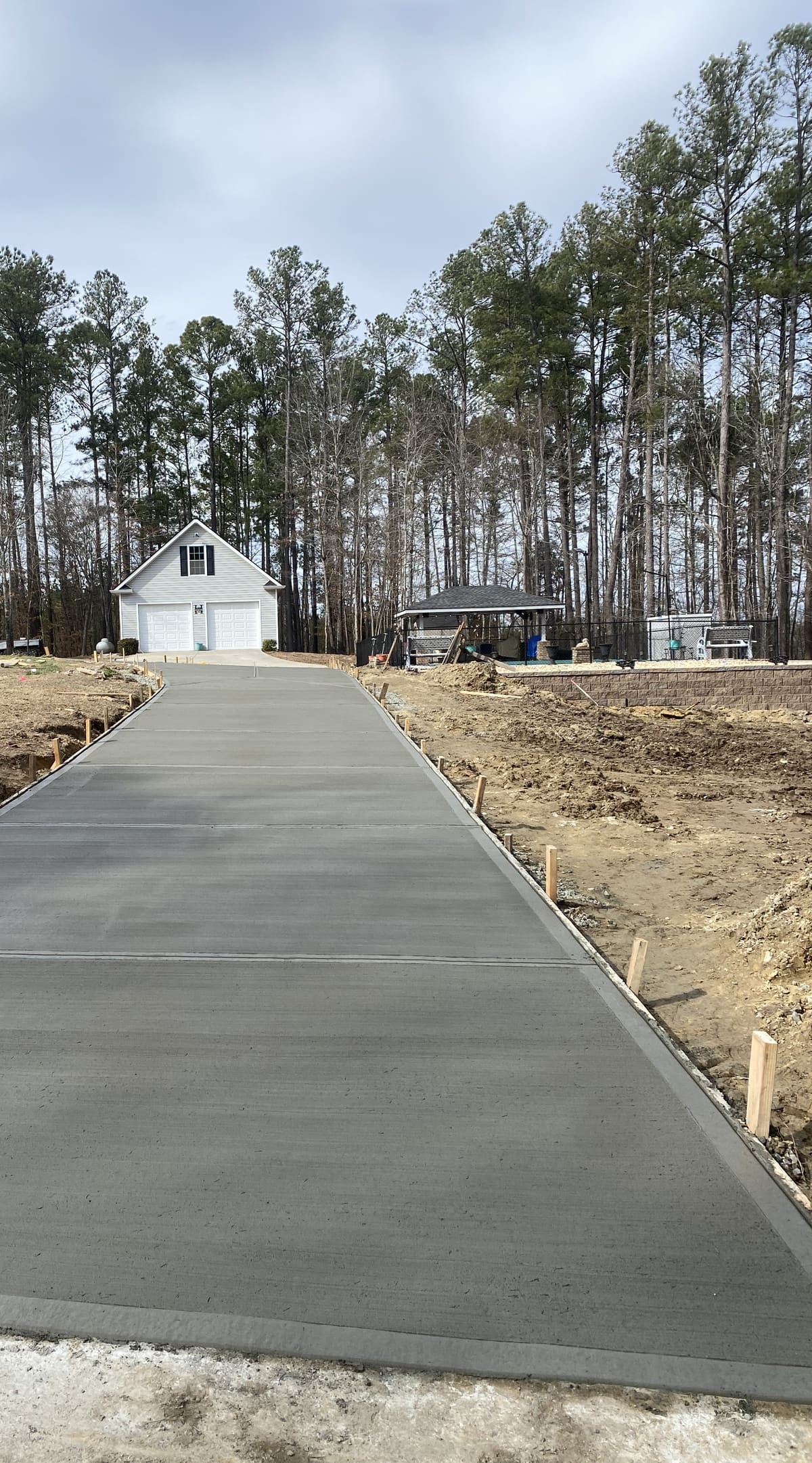
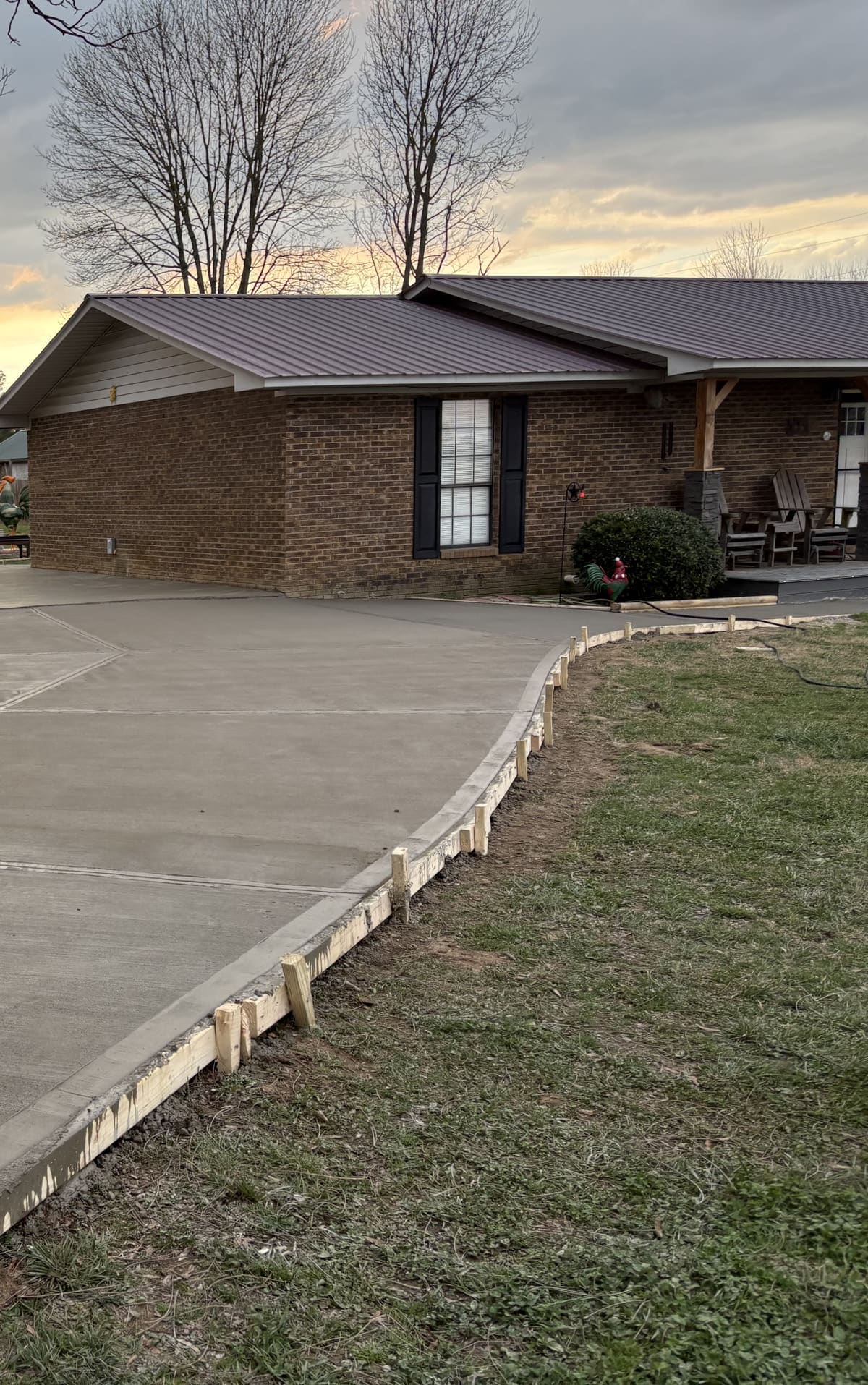
Forms go in first, along the edges, to hold the concrete to the shape and depth the job calls for. Most driveways sit on a compacted base under the slab rather than directly on native soil, since a base drains better and gives the concrete a firmer, more even surface to rest on.
Thickness and reinforcement come down to what the driveway needs to carry. Most driveways for regular vehicles are poured 4 to 6 inches thick, and one that's going to carry a work truck or a loaded trailer parking on it regularly usually calls for more of both. The soil under the site factors in too, so it helps to mention what's going to park there when you reach out.
Finish options for a concrete driveway
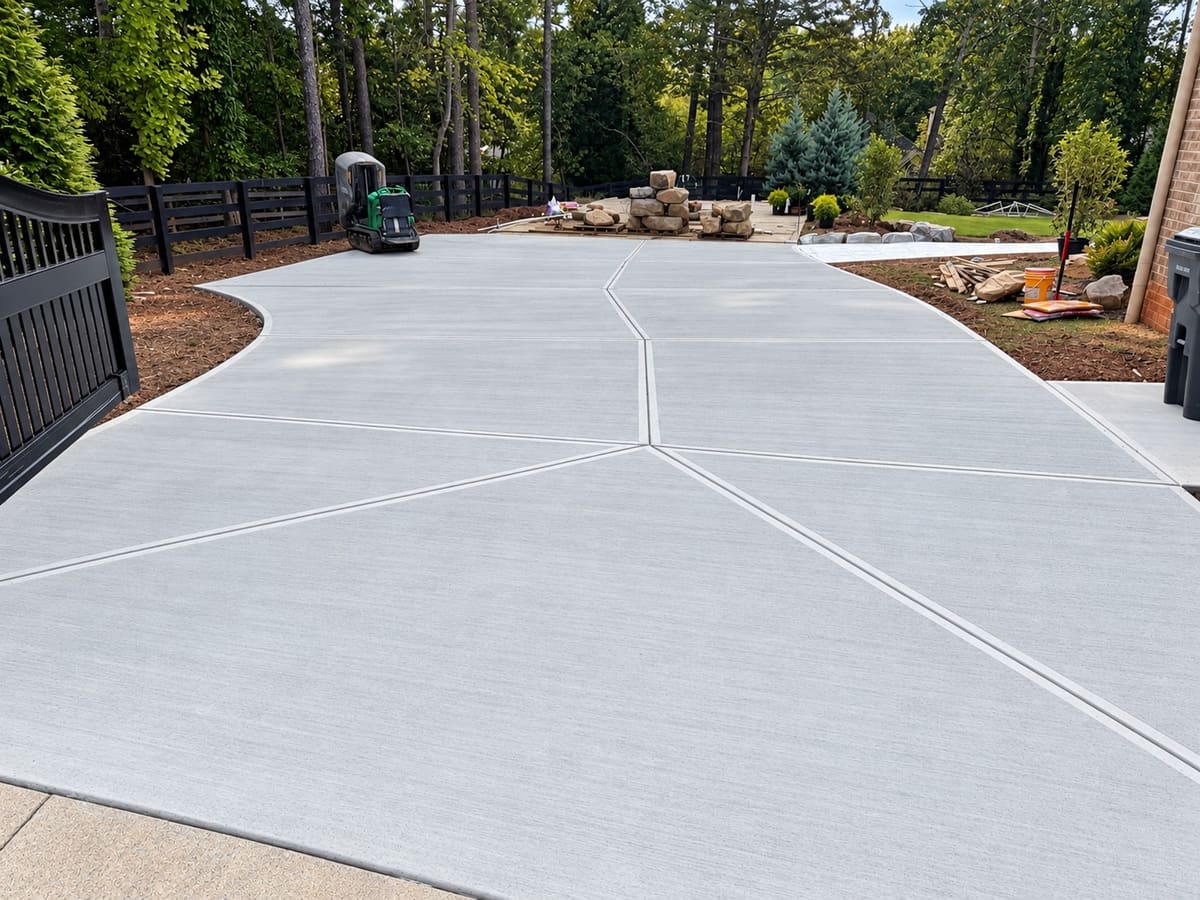
A broom finish is the standard look for a driveway. It's dragged across the wet surface in one direction, and it leaves a texture that grips tires and bare feet even when the concrete's damp. Exposed aggregate, where the top layer gets washed away to show the stone underneath, is another option some homeowners pick for extra grip and a different look underfoot.
Stamped concrete shows up more often on a patio or a walkway than a driveway, but it's not off the table if that's the look you want, in a pattern built to take vehicle weight.
How long does a new driveway take to cure?
A new driveway usually firms up enough to walk on within a day or so, but it needs longer before it's ready for a vehicle and longer still before it reaches full strength. Keep cars and trucks off it until we tell you it's ready.
Hot, dry weather speeds that timeline up. Cold or wet weather slows it down. Our guide on how long concrete takes to dry breaks the curing timeline down in more detail.
Concrete compared with gravel and other driveway materials
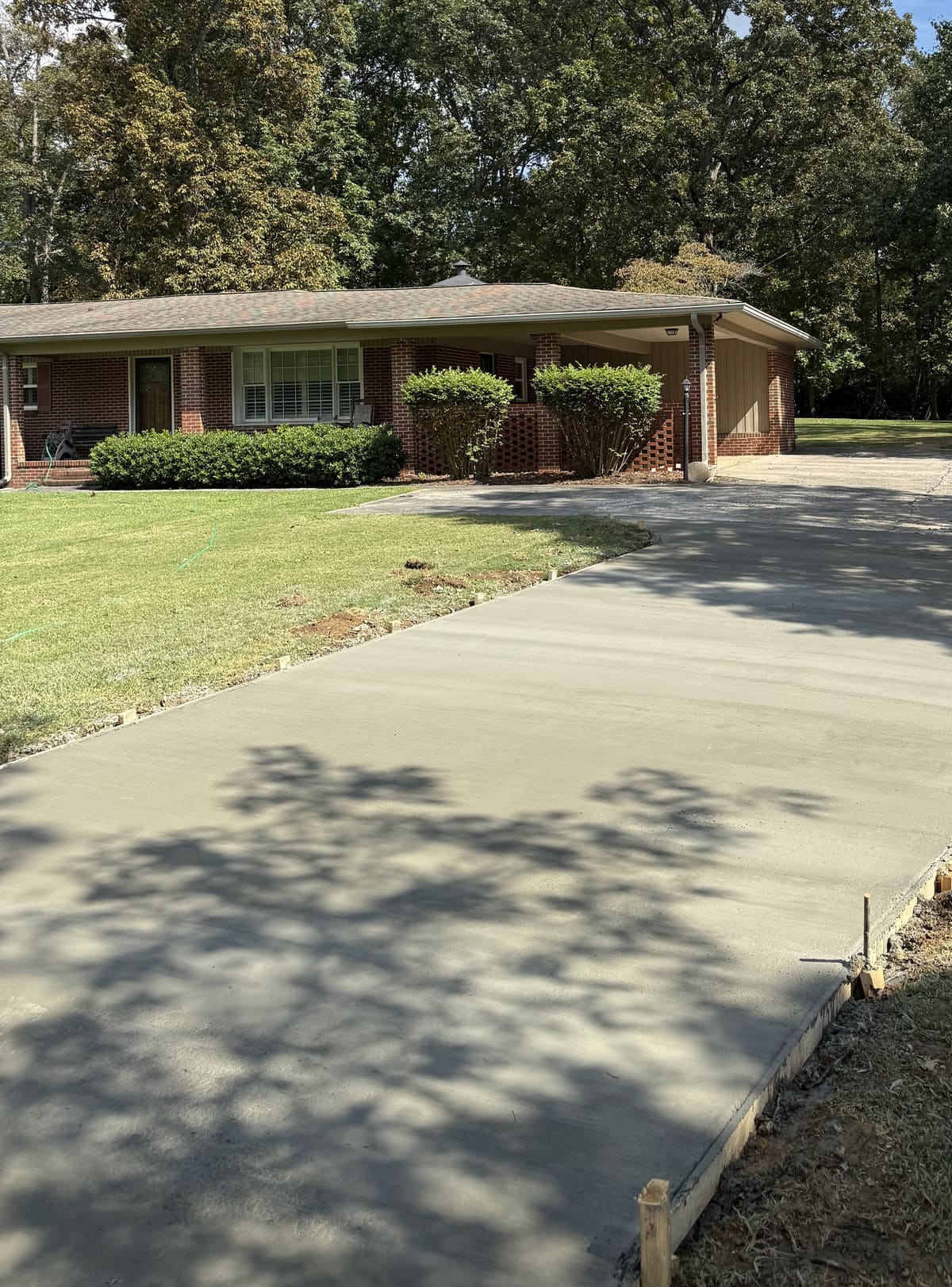
Concrete costs more to put in than gravel and holds up longer with less upkeep: no ruts to regrade, no stone to keep topping off every year. Asphalt and pavers each trade off differently on upfront cost, looks and how much maintenance they ask for down the road.
Our guide to types of driveways walks through how concrete, asphalt, gravel and pavers compare, and our gravel vs. concrete guide goes deeper on that one comparison. For what a job like yours typically runs, see our concrete driveway cost guide.
If you've got a driveway or an extension in mind, tell us about the project and we'll get back to you about it.
Questions about concrete driveways
Do you need gravel under a concrete driveway?
Most concrete driveways sit on a compacted gravel base instead of bare dirt. It helps drainage and gives the slab a firm, even surface to rest on. How deep that base needs to be depends on the soil underneath it.
Does a concrete driveway need rebar?
It depends on the soil and the load the driveway needs to carry. Many driveways use rebar or wire mesh for extra strength, especially where a work truck or trailer will park regularly.
When should a concrete driveway be replaced?
Once cracks widen enough to catch a tire, heave up on one side, or whole sections have crumbled or settled, it's usually time to think about pouring a new one. A few hairline cracks or some surface wear by themselves aren't a reason to replace a driveway.
What are the downsides of a concrete driveway?
It costs more to put in than gravel, and a crack or a stain is there to stay unless that section gets redone. A new driveway also takes weeks to fully cure, and being one continuous run of slab, it needs joints cut in at planned intervals so it doesn't crack wherever it wants.
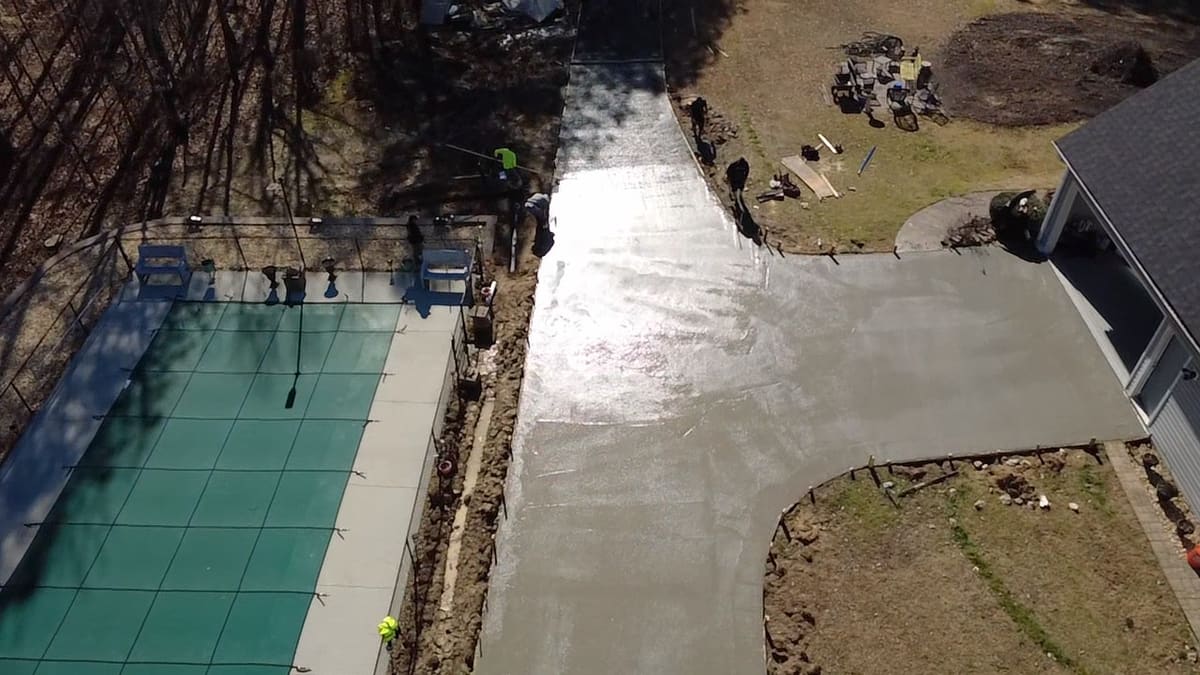
Driveways we've poured
Where we pour concrete driveways
Every town we serve in Georgia and Alabama.
Georgia
Ready for a new concrete driveway?
Send the details and we'll get back to you about an estimate.
(762) 842-4822Call or text, whichever is easier.
Request an estimate
Tell us what you're pouring and where, and we'll get back to you.
Call or text (762) 842-4822 for an estimate.
Thanks, we've got it.
We'll get back to you about your estimate. If it's urgent, call or text (762) 842-4822.