Driveways and walkways
Gravel driveways, and when concrete makes more sense
A gravel driveway costs far less to put in than a concrete one, but it asks for time every year afterward that a poured driveway doesn't.
Updated September 25, 2026
What a gravel driveway takes to put in, and to keep up
Gravel goes down fast: spread it, compact it, and you're driving on it the same week. The cost shows up later, as upkeep, usually a few times a year rather than once. A driveway that looked solid the week it was laid needs attention again sooner than most people expect.
Why do gravel driveways wash out, rut and grow weeds?
Slope is the biggest factor: water moving downhill carries loose stone right along with it, so a gravel driveway on any real grade loses material every time it rains hard. Weeds root in wherever soil works its way up between the stones, especially without a fabric barrier underneath, and regular vehicle traffic packs ruts into the same tire paths over time. None of that makes gravel a bad choice. It just means the upkeep is ongoing, instead of a one-time cost the way a poured driveway mostly is.
Crusher run: the gravel that acts like concrete
Crusher run, a mix of crushed stone and stone dust that compacts into something close to a solid surface, is sometimes called poor man's concrete because it holds up better than loose gravel while still costing much less than a poured slab. It packs tighter, sheds water better and ruts less than round, uniform gravel does, which is why it shows up on driveways more often than on decorative walkways. It still isn't concrete: a hard freeze, heavy rain or years of traffic will loosen and wear it in ways a poured slab doesn't.
Slopes and daily traffic: where concrete holds up better
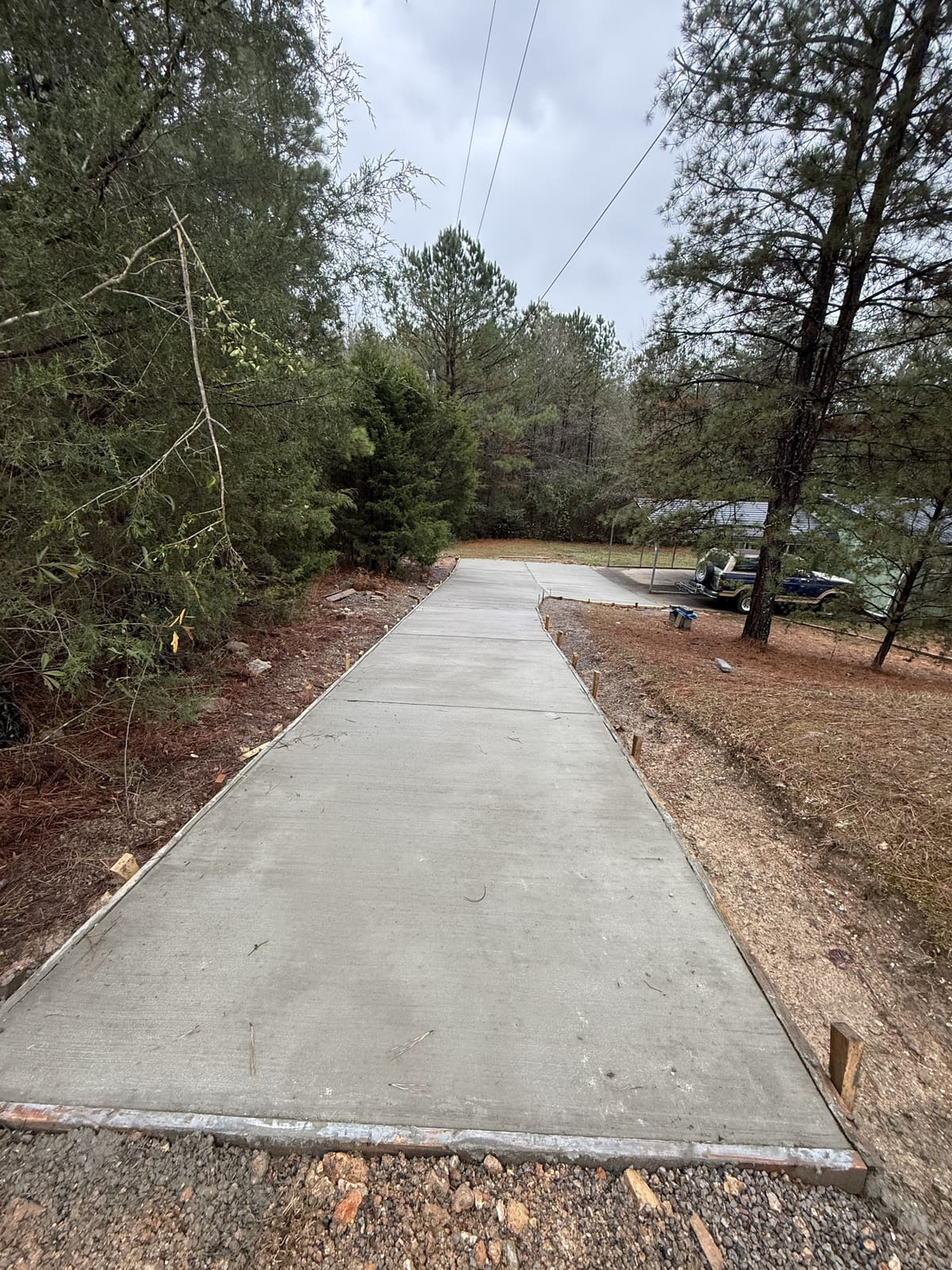
Concrete costs more up front, but it stops being an ongoing project once it's cured: no regrading, no fresh loads of stone, no washouts to patch after a hard rain. That trade-off tends to pay off on a driveway with real slope, one that gets daily traffic for years, or a house on a paved street where a gravel approach looks out of place next to the neighbors. A short, flat driveway that only sees occasional use is where gravel holds its advantage the longest.
Gravel or concrete: which one fits your lot?
Short, flat and lightly used points toward gravel. Sloped, daily traffic or a house on a paved street points toward concrete. Our types of driveways guide lays out where asphalt and pavers fit into that same decision, and our concrete driveway cost guide has real numbers once you're ready to compare them directly. Ask about your driveway and we'll help you sort gravel from concrete for your specific lot. Our concrete driveways page covers the pour itself.
What else do people ask about gravel driveways?
What are the downsides of a gravel driveway?
Upkeep is the big one: gravel washes out on a slope, ruts under regular traffic and grows weeds without a fabric barrier underneath. It also tracks stone onto a garage floor or into a lawn mower, and it needs fresh material added every so often to stay looking and driving the way it did when it was new.
How long will a gravel driveway last?
Indefinitely, in the sense that gravel doesn't crack or fail the way a poured surface can, but only if it gets fresh material and regrading on a regular basis. Skip that upkeep and a gravel driveway thins out, ruts and washes down to bare dirt in patches within a few years, especially on a slope.
What is poor man's concrete?
Crusher run, covered above. It packs tighter than loose gravel but still isn't concrete, so it won't hold up the same way over decades that a poured driveway does.
What happens if you don't put gravel under concrete?
A concrete driveway poured straight onto bare soil has nothing to drain into and nothing stable to rest on, so it's far more likely to crack, sink or heave as the ground underneath it shifts with moisture. A compacted gravel base gives the slab a stable, well-drained foundation to bear on instead.