Driveways and walkways
Types of driveways, and what each one is good for
Concrete is one of several ways to surface a driveway: asphalt, gravel, pavers and a few less common types each work better in some situations than others.
Updated September 25, 2026
Concrete driveways: broom finish, exposed aggregate and stamped
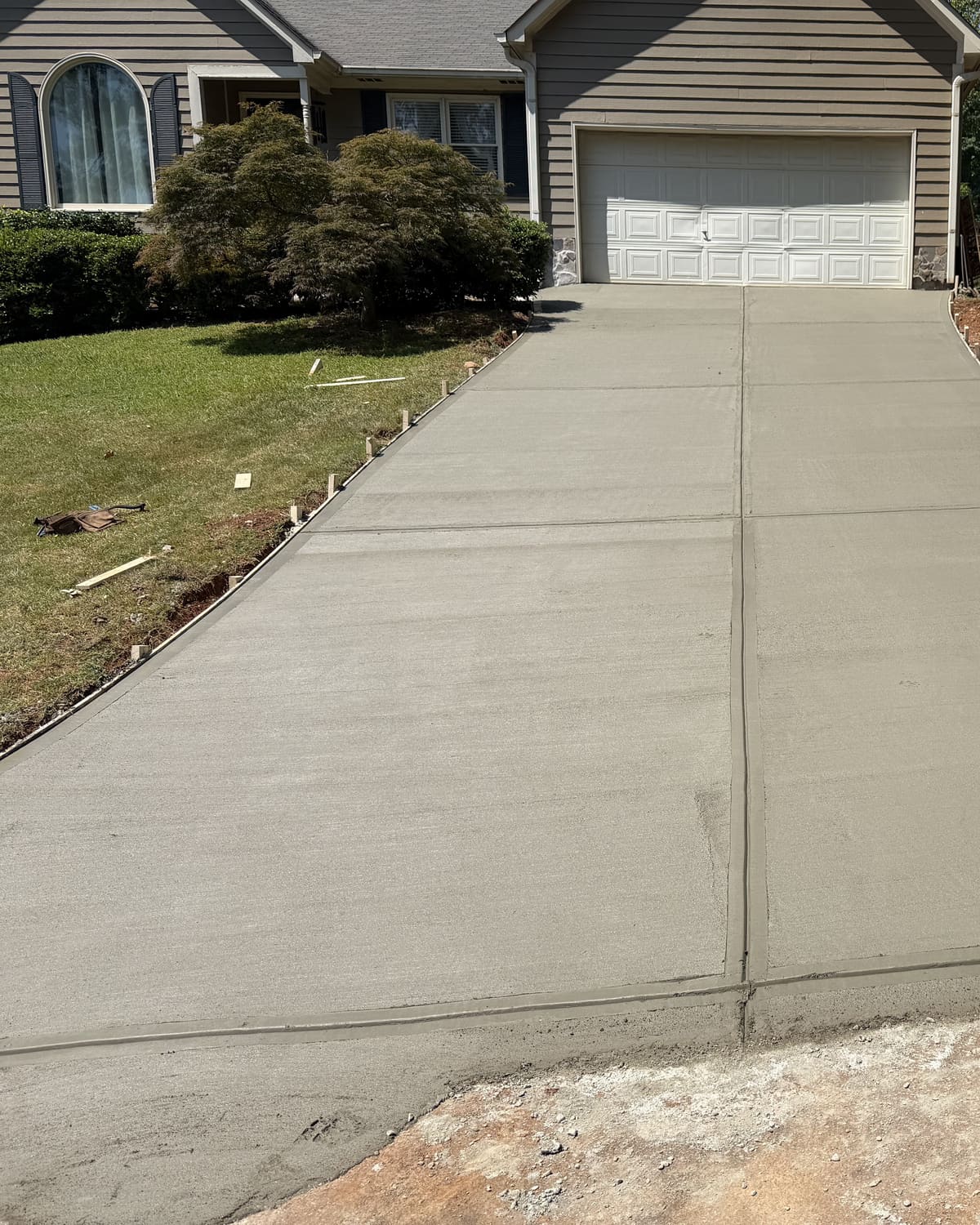
A concrete driveway holds up under vehicles, doesn't rut or wash out in heavy rain, and needs little upkeep once it's cured.
A broom finish, dragged across the wet surface for grip, is the standard look. Exposed aggregate shows the small stones inside the mix for texture, and stamped concrete presses a pattern into the surface to copy brick, stone or pavers. Our stamped concrete patterns guide goes deeper on pattern and color choices if that's the direction you're leaning.
Asphalt or concrete: which holds up better in Georgia heat?
Asphalt goes in fast and costs less up front than concrete, which makes it a common choice on a longer drive. It softens in real heat, though, and Georgia summers give it plenty of chances to rut under a parked car or a turning trailer.
Asphalt also wants a fresh seal coat every few years to keep water out, where a concrete driveway mostly just sits there and holds up. Over a long enough stretch of years, the upkeep on asphalt can close a lot of the gap in what the two cost to begin with.
Gravel driveways, and tar and chip
Gravel is the least expensive driveway to put down, and it drains well, but it also washes out on a slope, grows ruts under regular traffic and needs fresh material added every so often. Our gravel driveway guide covers what gravel takes to maintain and when concrete starts to make more sense.
Tar and chip, sometimes called chip seal, sprays hot asphalt binder and presses stone chips into it for a textured surface. It costs less than a full asphalt or concrete pour, though it doesn't last quite as long as either one.
Pavers, ribbon driveways and grass pavers
Concrete or brick pavers go down piece by piece over a compacted base. Our pavers vs. concrete guide weighs that against a poured slab, including how each one handles a crack or a stain.
A ribbon driveway pours two narrow strips of concrete under the tires and leaves grass or gravel between them, cutting down on both material and how much of the yard turns into hard surface. Grass pavers, a rigid grid filled with soil and turf, do something similar for a driveway that mostly needs to hold occasional weight, like guest parking.
What every driveway needs underneath it, no matter the surface
Almost every driveway problem traces back to what's under the surface, not the surface itself. A compacted gravel base gives water somewhere to go and keeps the material above it from shifting. That holds for concrete, asphalt and pavers alike.
Skipping that step to save time is one of the more common reasons a driveway cracks, sinks or washes out before it should. Georgia's clay soil holds water and shifts more than sandier soil does, which makes a solid base underneath matter even more here than it might elsewhere.
Which type of driveway fits your lot?
The right type of driveway comes down to your budget, how the lot slopes, how much upkeep you want to take on and how long you plan to stay in the house. A short, flat driveway on a tight budget might do fine in gravel.
A long approach up a slope, or a driveway that sees daily traffic for years, usually earns back the extra cost of concrete or asphalt in what it saves on upkeep. Our concrete driveway cost guide turns that into real numbers for Georgia.
Our walkway guide covers the same choices for the path to the front door. For the pour itself, see our concrete driveway work, and tell us about your driveway when you're ready for a number.
What else do people ask about driveway types?
What's the best type of driveway to have?
There's no single best driveway for every lot. Concrete is the common answer where low upkeep and a long lifespan matter most, gravel wins on a tight budget or a long rural drive, and pavers or stamped concrete suit a house where the driveway is part of the curb appeal. Your budget, your slope and how much upkeep you want to take on usually settle it.
What is the cheapest type of driveway?
Gravel costs the least to put in, by a wide margin. It costs more to keep up over the years than a paved surface does, so the cheapest driveway up front isn't always the cheapest one over time.
What kind of driveway lasts the longest?
A well-built concrete driveway typically outlasts asphalt and gravel, often by decades, as long as the base underneath it was prepared right. Pavers can last as long, though individual pavers shift and need resetting long before a poured slab fails.