Concrete basics
Stamped concrete patterns and colors, and how to choose
Stamped concrete patterns copy the look of stone, brick or wood in a poured slab, with color layered in a few different ways.
Updated September 25, 2026
Stamped concrete pattern families to choose from
Stamped patterns generally fall into a handful of families, each one aiming to copy a different natural or manmade material.
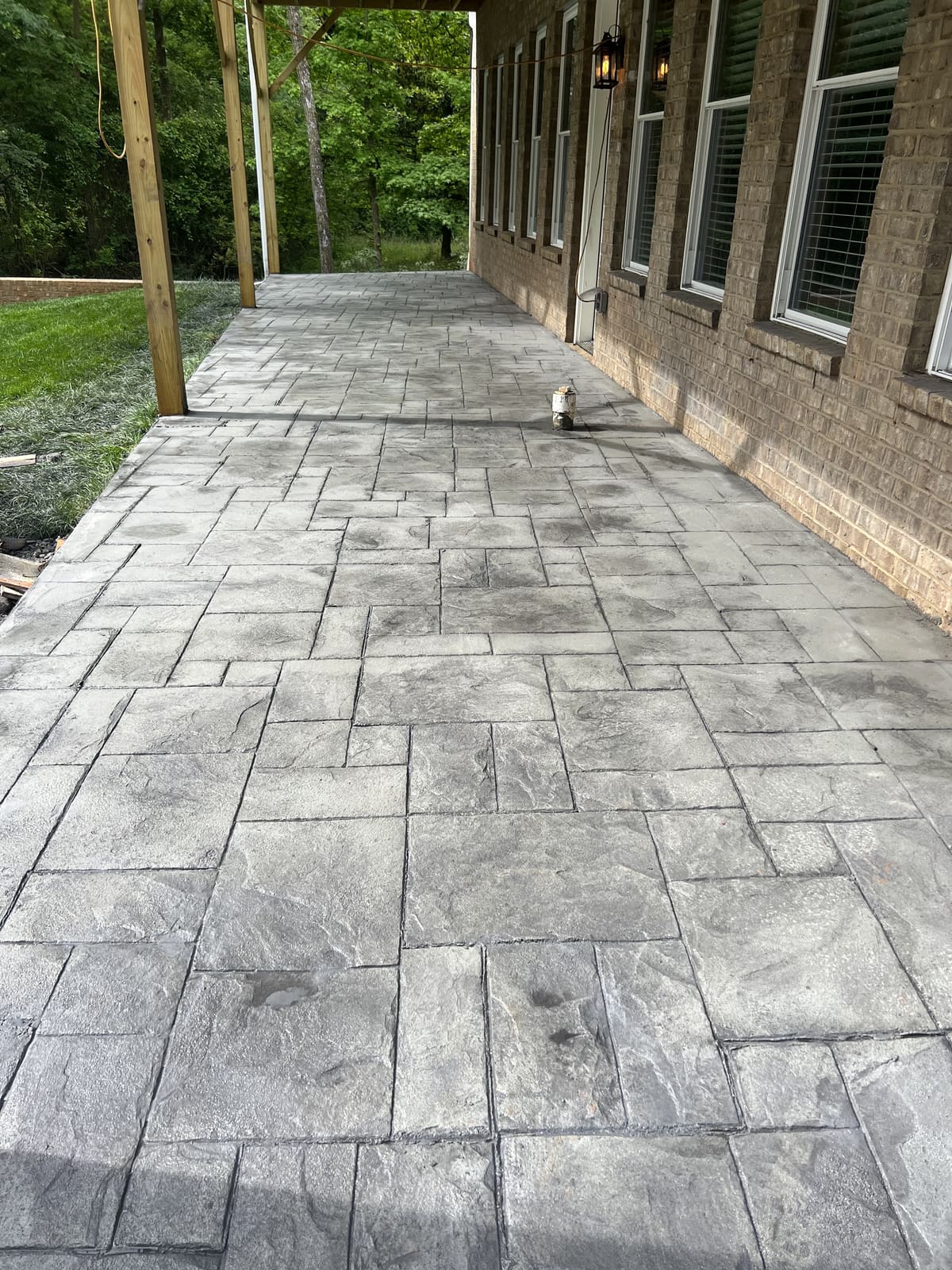
Stone and slate patterns are some of the most common, pressing an irregular, layered texture into the surface that reads like natural stone from a few feet back.
Cobblestone brings a rounded, hand-set look, while brick patterns, often laid out in a herringbone or basketweave, lean more formal. Wood plank patterns copy the long lines and grain of decking or hardwood, and flagstone mimics large, irregular cut stone pieces fitted together.
Each family comes in more than one specific stamp, with different joint widths and surface texture, so two slate patterns don't always look alike.
How color gets into stamped concrete
Color can go into a stamped job a few different ways, and most projects combine more than one.
Integral color gets mixed into the concrete before it's poured, so the color runs through the whole slab, not just the surface. It tends to read as a flatter, more even tone.
A color hardener goes down on the surface before stamping, adding both color and a harder, more wear-resistant top layer. A release agent, dusted on right before the stamps go down, keeps the tools from sticking and leaves a contrasting shade in the texture's low points.
Stains go on after the concrete has cured, which makes them a way to add or refresh color on an existing slab, not just a new one.
How do you pick a pattern and color that fits the house?
Matching a patio, walkway or pool deck to the house usually starts with what's already there. Brick, stone or siding on the house itself is a natural place to pull a pattern or color from.
A busy pattern next to a lot of other texture, like a stone foundation or a heavily landscaped yard, can start to compete visually. A simpler pattern usually reads better in that setting, even if it isn't the most eye-catching option in a catalog.
Color matters beyond looks too. Lighter colors stay cooler underfoot in direct sun, which is worth weighing for a pool deck or a patio that sits in full sun most of the day.
How long will stamped concrete hold up?
Structurally, a stamped slab lasts about as long as any other concrete slab poured the same way, since the pattern is pressed into the surface, not a separate material layered on top.
What ages faster is the finish. The color and sheen dull with sun and foot traffic well before the concrete itself is in any structural trouble.
What sealing a stamped patio actually involves
A sealer sits on top of the stamped surface, protecting the color underneath and adding sheen. Most sealers get slick when wet, so a pool deck or walkway usually gets an anti-slip additive mixed into the coat.
That coat needs to be reapplied on a regular schedule to keep doing its job. Skipping that upkeep doesn't damage the concrete right away, but the color and sheen fade as the coat wears down.
A fresh coat brings back some of the depth and contrast the pattern had when it was new.
Stamped concrete compared with a plain slab
A stamped pattern costs more than a plain broom finish, since the color, the stamping and a sealer coat all add work a plain pour skips. Our concrete patio cost guide shows what that difference typically looks like for a patio.
Poured concrete, stamped or plain, is also a common comparison point against pavers for anyone still deciding on a material. Our pavers vs. concrete guide compares the two directly.
Our stamped concrete page covers where this finish works best, patios, walkways and pool decks included. Tell us about your project and what look you're after, and we'll follow up.
What else do people ask about stamped concrete patterns?
What are the best color combinations for stamped concrete?
There's no single best combination; it comes down to what's already on the house. A neutral base color close to the house's stone, brick or siding, with a slightly darker accent in the release color or joints, is a common, safe starting point.
How long will a stamped concrete patio last?
About as long as any other slab poured the same way, since stamping doesn't change the concrete underneath it. What limits how long it looks good is the sealer: a heavily used, sun-exposed patio needs fresh coats sooner than a shaded one.
Is stamped concrete outdated?
No; it's shifted more than gone out of style. Simpler, more natural-looking patterns and muted colors show up more in newer projects than the bright, busy combinations that were popular years back.