
Concrete basics
Concrete vs. cement: the difference in plain terms
Concrete and cement aren't the same thing, even though people use the words as if they are. Cement is one ingredient, the binder; concrete is cement mixed with water, sand and gravel into the material that actually gets poured.
Updated September 25, 2026
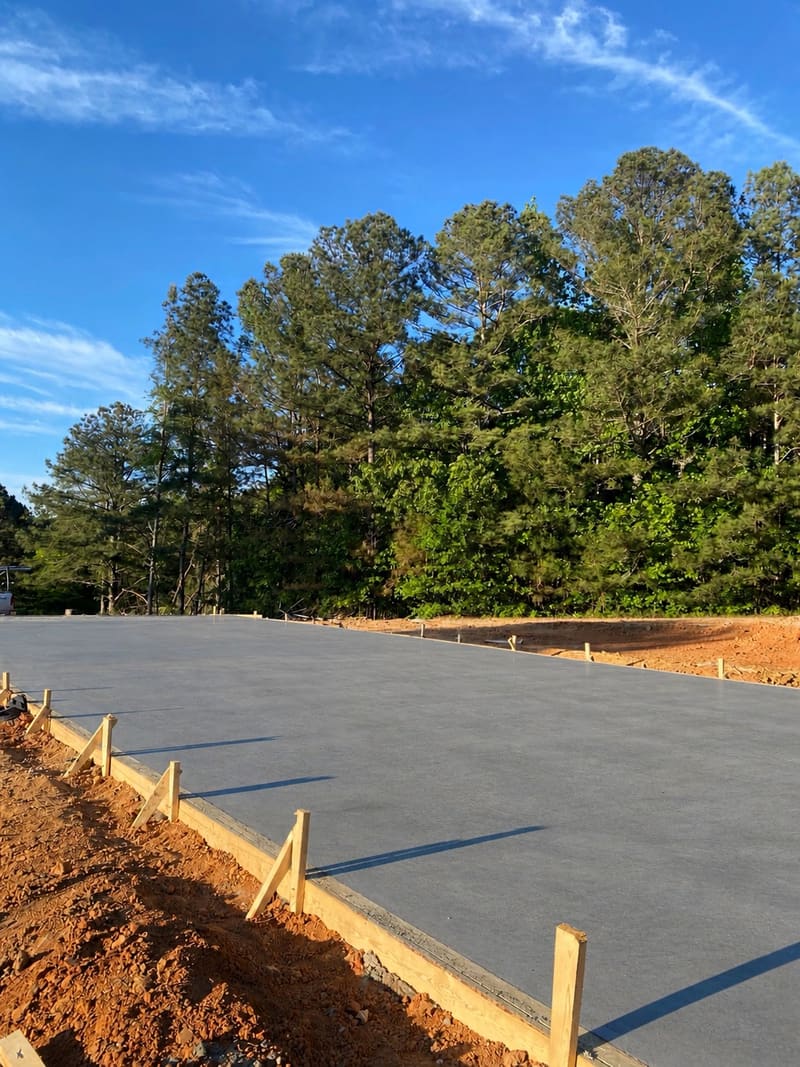
What cement is, and how it differs from concrete
Cement is a fine gray powder, made by heating limestone and clay together and grinding the result down. On its own, it's an ingredient, not a finished material.
Mixed with water, cement turns into a paste that hardens through a chemical reaction, not by simply drying out. That paste is the glue that holds everything else together.
Concrete is what you get once that paste is mixed with sand and gravel or crushed stone.
Portland cement is the type behind most of what gets poured around a house. Other types exist for specialty jobs, but a standard driveway, patio or slab isn't usually where that distinction matters.
How concrete is made from cement
Concrete is cement, water, sand and a coarse aggregate, gravel or crushed stone, combined in proportions that balance strength against workability.
A basic mix guide from the University of Illinois describes an old rule of thumb for mixing by volume: roughly 1 part cement to 2 parts sand to 3 parts gravel, mixed dry and then brought together with water until it's workable.
Homeowners and DIY guides often describe a similar ratio as the 4-2-1 rule: about 4 parts gravel, 2 parts sand and 1 part cement. Ratios like these are a starting point, not an exact spec; the aggregate on hand and the job still decide the right mix.
More cement generally means more strength, but also more cost and more shrinkage as the mix cures. Less cement keeps costs down but can leave the mix short on strength for anything structural, which is why getting the proportions right matters more than it might seem.
Why don't you just use cement by itself?
Cement paste alone shrinks a lot as it dries and cures, and it cracks easily without anything to bulk it out.
Sand and gravel do more than save money on cement. They give the mix volume and stability, and they're what actually carries most of the load once concrete hardens.
How mortar and grout compare with concrete
Mortar is cement, sand and usually lime, mixed thicker and without coarse aggregate. It's built for holding brick or block together, not for standing up to vehicle weight on its own.
Grout is thinner still: cement and fine sand mixed with more water, made to flow into gaps and joints, like the lines between tile. Neither one replaces concrete for a slab, a driveway or a footing.
All three, concrete, mortar and grout, start from the same cement paste. What changes from one to the next is the aggregate, or the lack of it, and how much water goes in.
Which one does a driveway, patio or footing need?
For anything structural, a driveway, a patio, a slab or a footing, concrete is the material for the job. Our concrete flatwork page covers the smaller pours that fall into that same category.
Once concrete's poured, our guide on how long it takes to dry and cure walks through the timeline, and our concrete calculator works out how much a job like yours would take.
Planning a slab, driveway or footing? Tell us about it and we'll talk through the pour.
What else do people ask about concrete and cement?
What is the 4 2 1 rule for concrete?
Four parts gravel, two parts sand, one part cement, by volume. Bagged mix is already proportioned, so the rule only matters when you're mixing from raw materials yourself.
Is cement stronger than concrete?
No. Cement paste alone is brittle and shrinks as it cures; it's the sand and gravel in concrete, properly proportioned, that give it the bulk and compressive strength to carry a driveway, patio or foundation.
Can you use cement by itself?
Not for anything structural. Mixed with sand it becomes mortar; with sand and gravel it becomes concrete.