Concrete basics
How long concrete takes to dry and cure
The surface firms up within a day, but full strength takes weeks, and heat, cold and rain each change that timeline.
Updated September 25, 2026
How long does concrete take to dry?
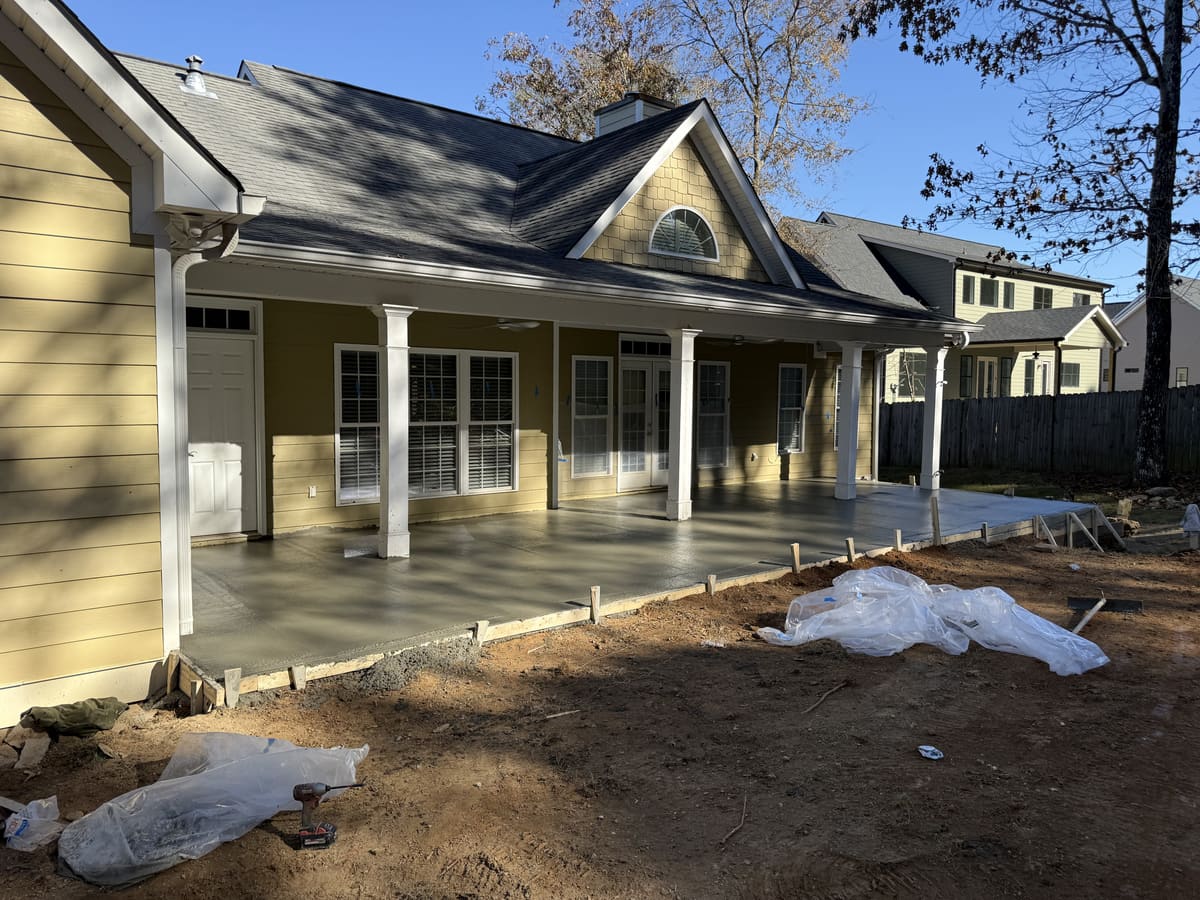
That depends on what you mean by dry. The surface can look and feel set within hours, while the concrete underneath keeps gaining strength for weeks.
Drying and curing aren't quite the same process. Drying is moisture leaving the surface; curing is the chemical reaction, hydration, that actually makes concrete hard and strong.
That reaction keeps going as long as there's enough moisture and warmth to drive it. It's why a driveway can look finished the day after it's poured but still needs weeks before it's carrying loads the way it's built to.
When can you walk on new concrete?
Most slabs are firm enough for careful foot traffic within a day or two, depending on the mix and the weather. Warm weather speeds that up; cold weather slows it down.
Twelve hours is too soon for most pours. The surface might look set, but it hasn't gained enough strength yet to handle weight without leaving a mark behind.
Keep kids, pets and lawn furniture off it for that first day, before anyone treats it like a finished surface. A footprint pressed into soft concrete doesn't come back out, which is the real reason to wait rather than guess.
When it's ready to drive on, and when it's at full strength
Driving is a bigger ask than walking. Most driveways need close to a week before regular vehicles should park on them.
Standard practice in the concrete industry is to measure a mix's compressive strength at 28 days, the point most specifications are written around. Concrete keeps gaining strength beyond that point too, just more slowly.
None of that means a driveway sits unusable for a month. It means the concrete is still building toward its full design strength well after it looks and acts finished.
How weather changes the timeline
Hot weather speeds up setting, which sounds helpful but isn't always. Concrete that sets too fast can crack from shrinking before it's built up enough strength to resist it. Guidance from the American Concrete Institute limits concrete's temperature to 95°F at the time it's placed for that reason.
Cold weather works the other way, slowing the chemical reaction down. Freezing can permanently weaken fresh concrete, so it needs to reach a modest early strength, well short of full strength, before it can safely face a hard freeze.
Rain is a timing problem more than a strength one. Fresh concrete needs a few hours to firm up. Rain before then can wash out the surface finish or leave pockmarks in it.
The 90 minute rule for delivered concrete
Ready-mix concrete has a clock running from the moment water hits the cement. For years the industry standard called for discharging a truck's load within about 90 minutes of batching, before the mix starts losing workability. Since 2021 the standard leaves that limit for the buyer and the plant to agree on, but 90 minutes still makes a good plan for pour day.
That's why access matters so much for a pour. A site the truck can reach quickly gives the crew more of that window to place and finish the concrete before it starts to set up.
Choosing a better day to pour
A forecast calling for a hard freeze, a heat wave or heavy rain within the first day is a good reason to move a pour rather than fight the weather.
Our concrete driveways page covers how weather and timing fit into a driveway project specifically. If you're weighing a stamped finish, our stamped concrete patterns guide covers pattern and color choices, since timing matters even more on a stamped job.
Curious what's actually in the mix? Our concrete vs. cement guide breaks down the difference. Ready to talk timing for your own pour? Tell us about it.
What else do people ask about drying and curing?
Can I walk on concrete after 12 hours?
Usually not yet. Most slabs need at least a day, sometimes two, before they're firm enough for foot traffic, and cold weather stretches that further. Twelve hours is on the early side for most pours.
What is the 90 minute rule for concrete?
Get the load placed within about 90 minutes of batching. Newer specs leave the exact limit to the buyer and the plant, but it's still the target to plan around.
How long does concrete need before rain?
A few hours, at least, before rain won't damage the surface. Concrete that's rained on too early can end up with a pitted, washed-out finish where the top layer never got the chance to firm up.
When should you not pour concrete?
In winter, watch the overnight low for that first day or two. In summer, watch the afternoon high and the storm chance instead. Either one working against you that early is a good reason to push the pour.
Sources for this guide on drying and curing
- Cement & Concrete FAQ: What does "28-day strength" refer to? (American Cement Association / cement.org)
- Maximum temperature limits for hot-weather concreting (American Concrete Institute)
- What is the effect of freezing on concrete? (American Concrete Institute)
- Concrete Q&A: "90-Minute Rule" for Ready Mixed Concrete (American Concrete Institute)