Structures on a pad
Shed foundation options, and when a concrete pad is worth it
A shed foundation can be gravel, concrete blocks, skids or a poured slab. What's going inside the shed usually decides which one makes sense.
Updated September 25, 2026
Gravel pads, concrete blocks and skids under a shed
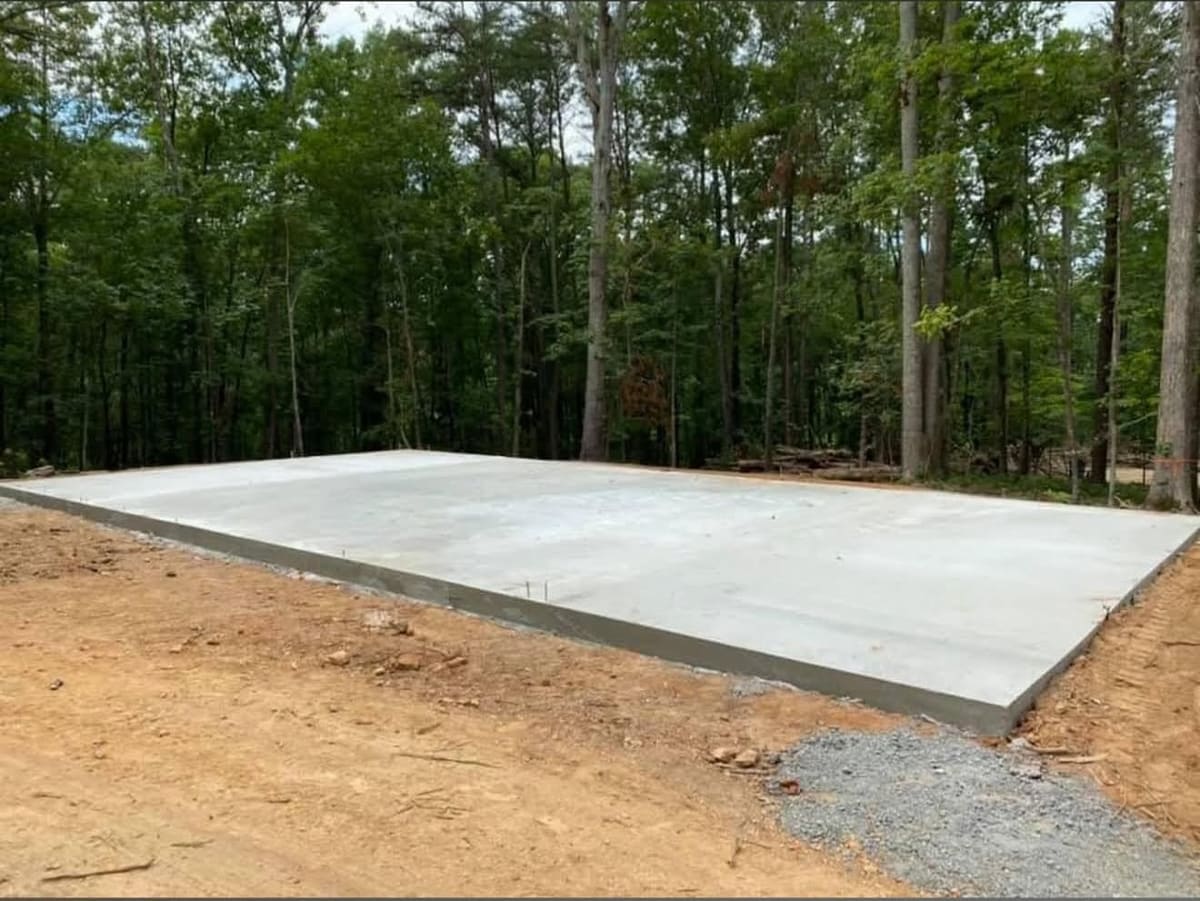
A small shed can sit on any of several bases: a leveled bed of compacted gravel, concrete deck blocks spaced under the frame, pressure-treated skids laid on the ground, or a poured concrete slab. Gravel and blocks cost the least and go in fastest.
They're common under a basic storage shed that isn't holding much weight or seeing much foot traffic. None of them anchor a shed down the way a slab does, which starts to matter once wind or a heavier building comes into the picture.
When does a shed need a poured concrete slab instead?
A slab earns its cost once a shed stops being simple storage. A workshop with a workbench and tools bolted down needs a flat, solid surface underneath it, and so does a shed holding a riding mower or other heavy equipment.
Blocks and gravel can shift or settle unevenly under that kind of concentrated weight.
How deep do shed footings need to go?
A small, detached shed that doesn't need a permit often skips a true footing altogether, resting instead on a slab, blocks or gravel at or near the surface. Once a shed is large enough, or built with permanent footings, Georgia's residential code sets a minimum depth for those footings. The Alabama counties we cover follow their own state's residential code, which sets footing depths the same way; check with your county building office for the current number.
Exterior footings need to reach not less than 12 inches below the undisturbed ground surface, with added depth or protection where frost is a factor. Your county building office can tell you where your specific shed falls, since permit thresholds vary by size and by county.
Getting a shed pad level and shedding water
A shed base that isn't level puts uneven stress on the frame and can leave a door that never quite closes right. Drainage matters just as much.
A pad sitting below the surrounding grade collects water against the shed's base. That's a common way a wood floor or frame starts to rot years before it should. Sloping the ground away from the pad, and setting the pad itself slightly above the surrounding grade, keeps water away from the base before the shed ever shows up.
Sizing a slab for heavy tools, a workshop or a riding mower
How thick a shed slab needs to be comes down to what's going to sit or roll across it. A 4 inch slab is the usual starting point under a basic storage shed.
Reinforcement is the other variable. A workshop with heavy tools or a riding mower usually gets a thicker slab, reinforcement, or both. The estimate spells out which, based on what will sit on it.
Matching the right foundation to the shed you're planning
A basic storage shed usually does fine on gravel or blocks; a workshop, a riding mower or an open, windy site is where a slab earns its keep. We pour the pad; the shed itself, kit-built or built on site, is a separate question from the concrete underneath it. Our kit building foundation guide covers what a kit-built structure typically needs, and our detached garage guide walks through the same trade-offs for a bigger structure.
Building a storm shelter or safe room instead changes the slab's job considerably; see our storm shelter guide for that. From there, the concrete foundations page and an estimate request are the next two steps.
What else do people ask about shed foundations?
What is the best foundation for a shed?
It depends on what the shed is for. Gravel, blocks or skids suit a small shed used mainly for storage, while a poured concrete slab is the better foundation once you're talking about a workshop, heavy equipment or a shed getting daily use.
What is the cheapest way to build a foundation for a shed?
A leveled bed of compacted gravel is typically the least expensive base for a small shed, with concrete deck blocks a close second: none of the forms, cure time or delivery minimum a poured slab needs. Most homeowners can put in either one themselves.
How deep should a shed foundation be?
Small sheds usually don't need a footing at all. Once one does, the same 12 inch minimum as a house applies; see the footing section above.