Structures on a pad
Pole barn or metal building: how they differ and what goes underneath
A pole barn and a metal building solve the same problem, a barn, shop or storage building, in different ways: one is framed with posts in the ground, the other with steel anchored to a slab.
Updated September 29, 2026
Post frame versus steel frame: the basic difference
A pole barn is post-frame construction: large wood posts set deep into the ground and spaced out to carry the roof and walls between them. A metal building is steel-framed: engineered columns and rafters bolted together and anchored to a foundation rather than buried in the ground.
What a pole barn needs underneath it
A pole barn's posts typically go straight into the ground, in holes deep enough to clear frost and give each post solid bearing, as the building's plans call for.
Each post sits on a concrete footing at the bottom of the hole so it can't sink, and often gets a concrete collar around it to hold it against uplift and side loads.
The floor is a separate decision. Plenty of pole barns get by on dirt or gravel, especially for hay or equipment storage, while others add a poured slab once the space is doing double duty as a shop.
What a metal building needs underneath it instead
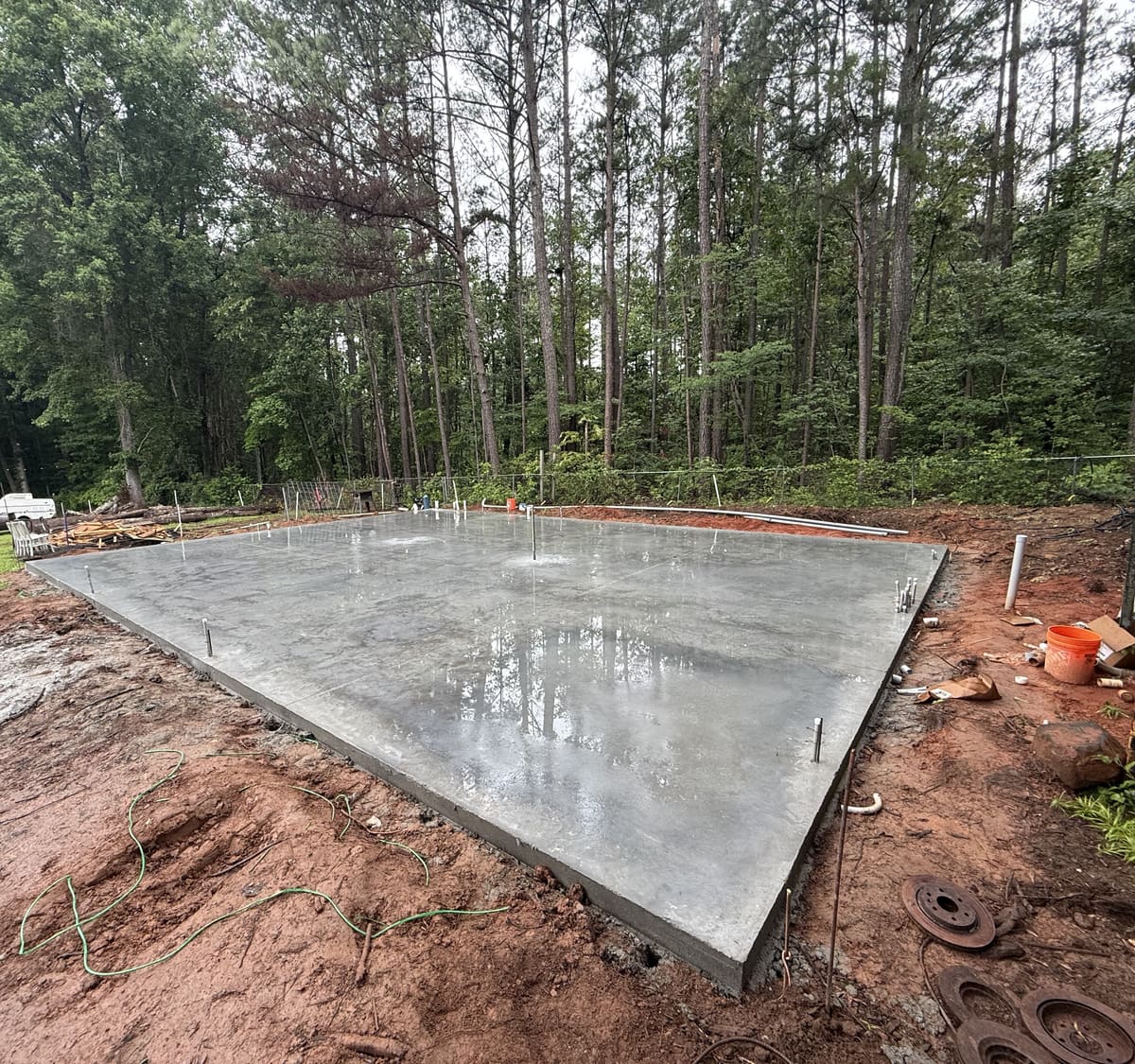
Because a metal building's frame bolts down instead of going into the ground, almost every metal building kit is engineered around a poured concrete slab. Anchor bolts go into the slab at locations the manufacturer's engineered drawings specify, tied to the building's column layout.
The slab is thickened, or gets a separate footing, at each column base, where the frame's load lands, with a thicker edge along the walls. A basic open carport is sometimes the exception, but anything with walls and a finished floor is built to sit on concrete.
Which one lasts longer, and what needs watching?
Both styles hold up for decades when they're built and maintained right. A pole barn's posts are the part to watch over time, since wood buried in the ground is more exposed to rot and insects than steel bolted to a slab above grade.
A metal building's steel frame doesn't share that particular risk, though its panels and fasteners still need occasional attention, and its coating is what typically shows age first.
Which one takes more material and labor to put up?
A pole barn is often the less expensive frame to put up, since its posts double as foundation and frame, so there's no engineered steel to buy and no slab has to go in before the walls go up.
Add a poured slab, real insulation or a finished interior to either one, though, and the gap narrows fast. A metal building's cost tends to sit more in the frame and the engineering behind it, while a pole barn's cost shifts toward the floor and finish-out if you add them later.
A metal building we recommend, or a pole barn we pour under
We partner with a metal building company and can recommend metal buildings and carports, and we pour the slab under a metal building or the footings and floor under a pole barn.
A pole barn's frame comes from a post-frame builder; we don't build or sell it. Our metal buildings page covers the styles and sizes we can recommend.
Our pole barn kits guide and our metal building kits guide go deeper on what typically comes in each kind of package.
When you've picked a direction, send the site address and a rough size through our estimate request. Our metal building foundations page covers that side of the job.
What else do people ask about pole barns and metal buildings?
Which is cheaper, a pole barn or a metal building?
Usually the pole barn, until you add a slab, insulation and a finished interior. At that point, compare the two quotes with the same floor and finish in both before trusting the gap either way.
Does a pole barn need a concrete floor?
Not necessarily. A dirt or gravel floor is fine for hay and equipment; pour concrete once it's a shop, holds a vehicle or gets daily use.
Which lasts longer, a pole barn or a steel building?
Neither by itself. Keep water off a pole barn's buried posts and keep a metal building's coating and fasteners up, and both go for decades.