RV carports, and the concrete pad under them
An RV carport is a tall steel frame and metal roof that keeps sun and rain off your camper or motorhome. We partner with a metal building company and can recommend an RV carport, and when your setup calls for a concrete pad, we pour it, across Northwest Georgia and East Alabama.
Request more information
Tell us what the building's for and where it'll go, and we'll get back to you with more information.
Call or text (762) 842-4822 for more information.
Thanks, we've got it.
We'll get back to you with more information. If it's urgent, call or text (762) 842-4822.
What size RV carport do you need?
Start with your RV's real measurements, since the number in its name often leaves things out. A 30-foot camper can measure longer than that once you count the hitch and the rear bumper.
Three numbers settle it. Length runs from the hitch or front bumper to whatever sticks out farthest at the back. Width counts any slide-outs you plan to open under the roof. Height runs to the top of the air conditioner or antenna, whichever sits higher.
Clearance is the one that catches people. What counts is the lowest point of the frame at the entrance, and the peak of the roof doesn't help you there, so check that number against your RV with some room to spare.
Then add space to walk around it, open the doors and get the awning out if you use one. Tell us what you're parking, and we'll go over the sizes our partner's lines offer.
Does an RV carport need a concrete pad?
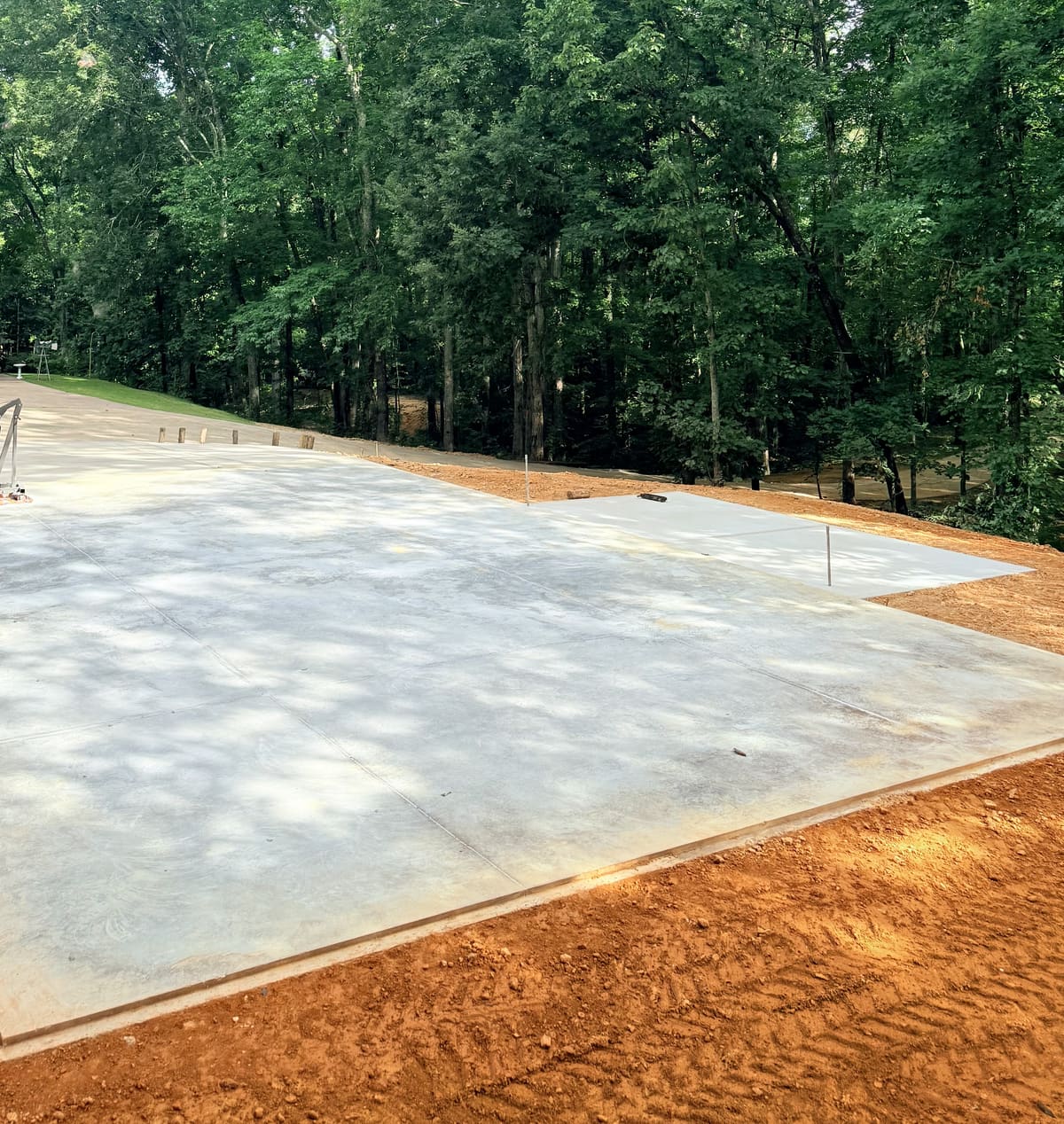
Not always. A well-built gravel pad can work under an open RV carport, and the carport's own instructions will say which anchors go with which surface. Check those before you decide.
A pad starts to earn its keep when the carport has walls, since walls catch wind and usually call for bolts into concrete. It also helps when a heavy rig sits in one spot for months. Gravel can rut and shift under tires and jacks, and concrete holds its shape.
There's the everyday side too: a flat, clean place to step out, hook up and work on the rig, with no mud in wet weather. Our kit building foundation guide compares what different kit buildings need underneath, and our carport kits guide goes deeper on slab versus gravel.
Concrete pads for RV parking
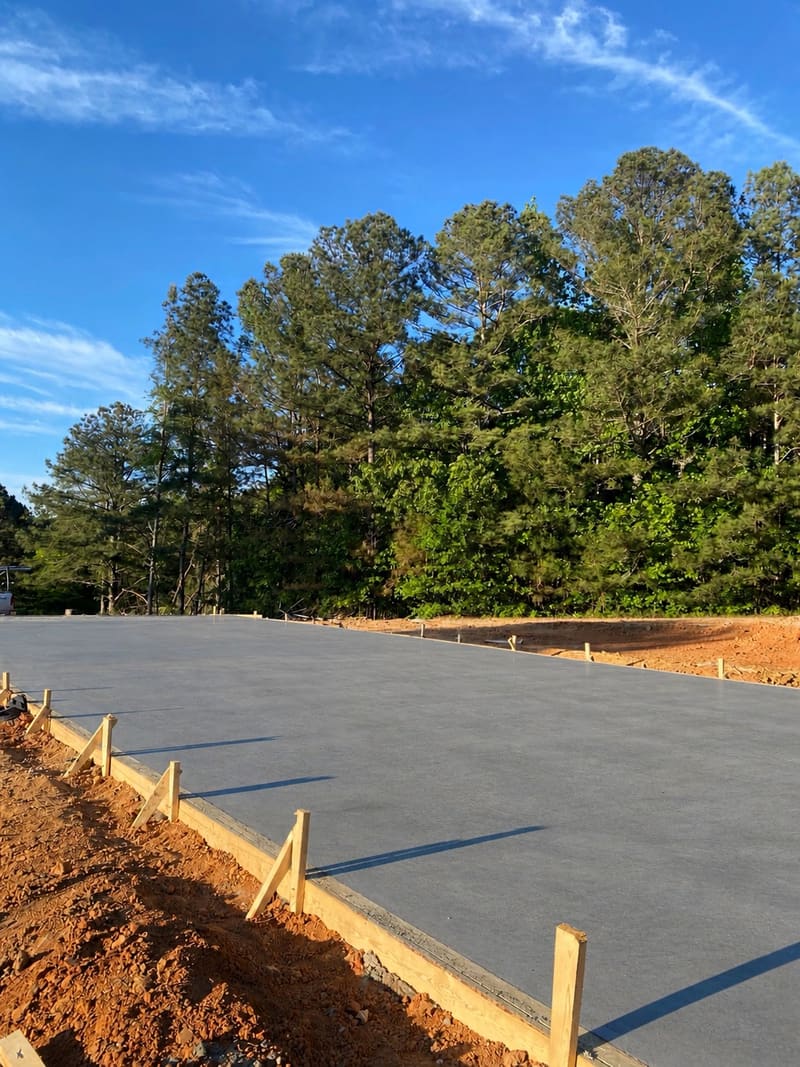
You don't need a carport to want a pad. We pour concrete pads for RV parking with or without a roof going over them, and it's the same kind of work as our slabs and flatwork.
An RV asks more of the concrete than a car does, because a lot of weight comes down on a few small spots: the tires, the jacks and the stabilizers. How thick it should be and what goes in it depend on the rig, so tell us what you're parking.
Plan the way in as well. A long camper or motorhome needs room to swing in, and that can decide where the pad goes on the lot. If the turn off your driveway's too tight, a wider concrete driveway may be part of the same job.
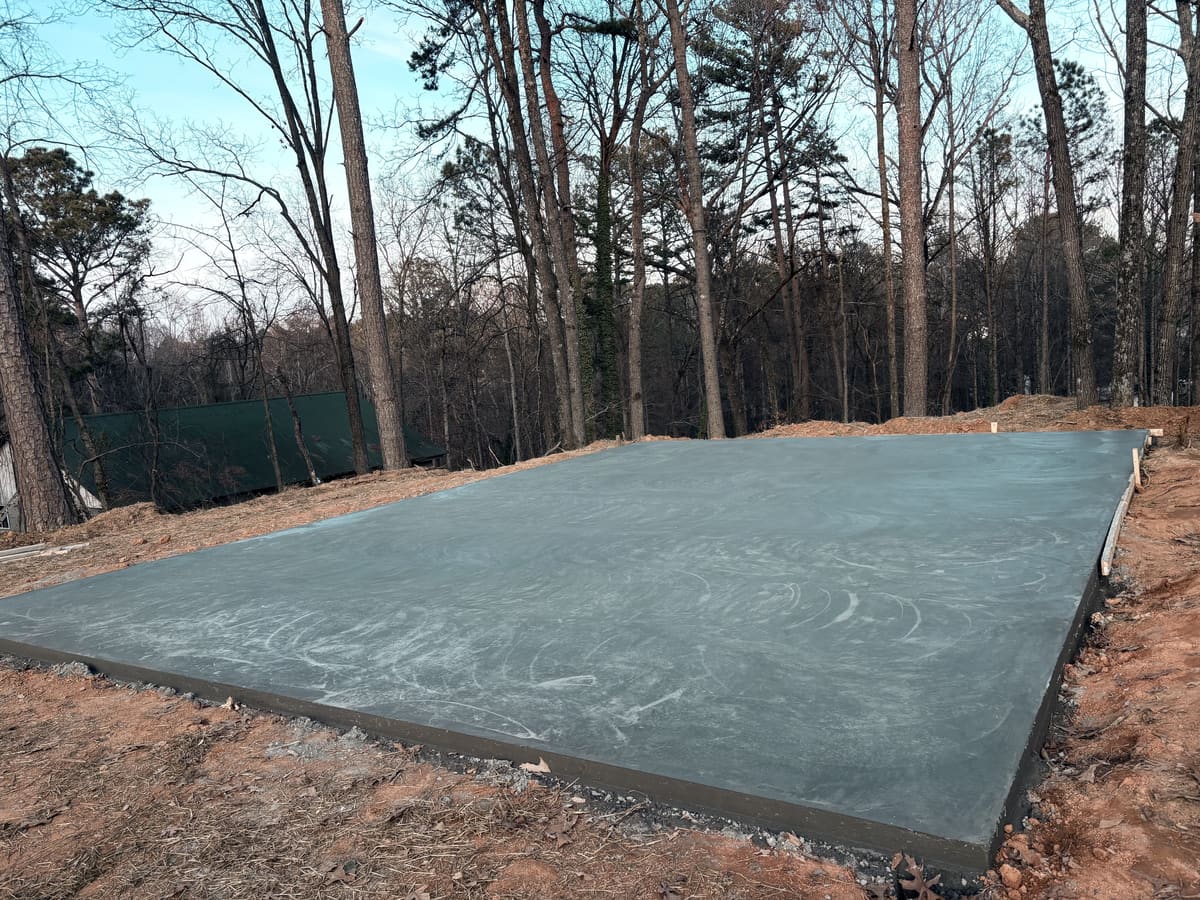
A pad gets a slight slope so water runs off it and doesn't pool under the rig. If a carport might go over it someday, say so up front, since it's easier to size for the legs now than to pour more later.
Metal RV covers and steel RV carports
People use several names for the same thing. RV covers, RV ports, RV shelters and steel RV carports can all mean a metal roof on a steel frame, tall enough for a camper or motorhome. That's a different product from the fabric cover you pull over the RV itself, and fabric covers aren't something we can help with.
Some stay open on every side. Others get a side wall or a closed end for more weather protection, and those are the ones most likely to need a concrete pad. The same kind of frame can work for a boat on a trailer too, so tell us what's going under it.
We don't make or sell these buildings ourselves. Our metal buildings overview explains how recommending one through our partner works, and you can call us or request more information to get started.
Questions about RV carports
How tall should an RV carport be?
Tall enough that the lowest point of the frame clears the highest point of your RV, usually the air conditioner, with some room to spare. Measure your own rig, since heights vary a lot from a pop-up camper to a motorhome.
Do you need a permit for an RV carport?
Often, yes. A structure that size commonly needs one, though the rule depends on your city or county. Ask the local building office about the permit and the setbacks before you order.
Can you pour a pad for a camper without a carport over it?
Yes. We pour RV pads with or without a roof going over them. If you might add a carport later, tell us, so the pad gets sized with room for its legs and anchors.
Need a roof over your RV?
Call, or send your details and we'll get back to you with more information.
(762) 842-4822Call or text, whichever is easier.
Request more information
Tell us what the building's for and where it'll go, and we'll get back to you with more information.
Call or text (762) 842-4822 for more information.
Thanks, we've got it.
We'll get back to you with more information. If it's urgent, call or text (762) 842-4822.